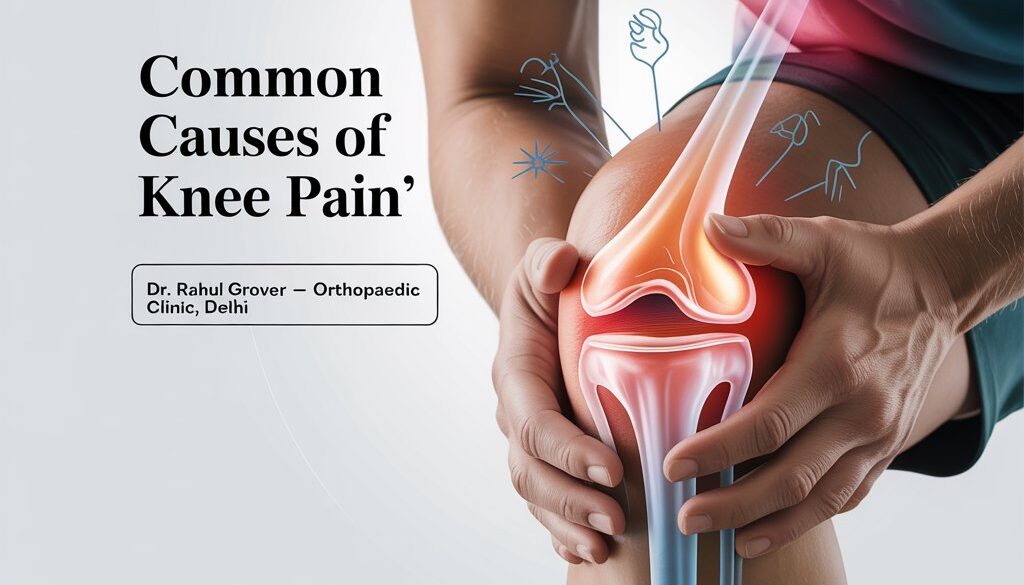
Common Causes of Knee Pain
Knees are something most of us don’t think much about—until they start hurting. Whether it’s climbing stairs, walking your dog, or just getting up from a chair, knee pain while climbing stairs symptoms can make simple things difficult. It can come on suddenly after a fall or injury, or it may creep up slowly over time. While rest and home remedies help in some cases, other times knee pain symptoms is your body’s way of saying, “Hey! Something’s not right.” So, how do you know what’s causing the pain and when it’s time to see a doctor? Let’s break it down for you so that parents, kids, or anyone can understand knee pain while climbing stairs Symptoms.
1. Ligament Injuries
Knee has strong bands called ligaments that hold it together. There are four major ones, and if any of them get stretched or torn, it can cause a lot of pain and swelling.
- ACL Tear: Common in sports like football or basketball, caused by sudden stops or turns.
- MCL Tear: This happens when the outer knee is hit, usually during contact sports.
- PCL Tear: Usually caused by falling hard or a car accident.
- LCL Tear: It is less common but causes pain on the outer side of the knee.
2. Meniscus Tear
The meniscus is like a soft cushion inside your knee. If the knee gets twisted in the wrong way or you are lifting something heavy, it can get torn. You might feel pain, swelling, or like your knee is “locking.”
3. Tendonitis (Tendon Inflammation)
Tendons connect muscles to bones. If they get overused, they can become sore and swollen. This is common in runners, jumpers, and cyclists.
- Jumper’s Knee (Patellar Tendonitis): In this there is pain just below the kneecap.
- Quadriceps Tendonitis: It means that you have pain above the kneecap.
4. Bursitis
Bursae are tiny, fluid-filled cushions inside your knee. They help to reduce friction. When these get inflamed or swollen, usually from too much kneeling, you may see swelling, warmth, and pain.
5. Osteoarthritis
This is common as we age. The soft cartilage that cushions your bones wears out, leading to pain, stiffness, and swelling. If you’re over 50 or have had a previous knee injury, you might be at risk.
6. Rheumatoid Arthritis
This is a condition where your immune system attacks your joints. It usually affects both Knee Pain While Climbing Stairs and causes pain, swelling, and stiffness.
7. Gout and Pseudogout
- Gout is caused by uric acid crystals in the joint, leading to sudden, intense pain.
- Pseudogout is caused by calcium crystals, usually seen in older adults.
8. Knee Infections (Septic Arthritis)
Sometimes bacteria can enter the knee and cause an infection. If your knee is swollen, red, warm, and painful and you have a fever, it’s time to see a doctor immediately
9. Excess Weight
Knee Pain While Climbing Stairs carry your body weight. So, extra weight means extra pressure on your knees. Even small weight loss can reduce pain and protect your knees.
10. Flat Feet and Bad Alignment
The way your feet touch the ground effects how your knees move. Flat feet or poor posture can lead to knee pain symptoms, especially after standing or walking for long hours.
11. Weak Muscles and Tightness
Your muscles support your knees. If they are weak, your knees may have to bear a lot of stress. Regular exercises can keep your muscles strong and flexible.
12. Overuse
Doing the same thing repeatedly without resting to heal like running, kneeling, or squatting can lead to pain over time. This is called overuse. Giving your knees proper rest and recovery is important.
Symptoms That May Show Up with Knee Pain
- Swelling or redness
- Stiffness or difficulty moving
- Popping, grinding, or clicking sounds
- Weakness or instability
- Sharp, sudden pain or dull, aching pain
- Feeling like your knee might “give out”
If you notice any of these, don’t ignore them. Especially if the pain is getting worse or just won’t go away
When Should You See a doctor?
See a doctor if:
- The pain is severe or doesn’t improve with rest
- If your knee is swollen, hot, or red
- You can’t put weight on your leg
- You’ve had an injury or accident
- Or you feel like your knee might collapse
Talk to an Orthopedic Expert
At Dr. Rahul Grover’s Orthopaedic Clinic in Delhi, we believe in early diagnosis, clear explanations, and compassionate care. Whether it’s a sports injury, arthritis, or something more serious, we’re here to help.
Don’t wait for the pain to get worse. Book a consultation today with one of the most trusted knee specialists in Delhi.
Had a great experience with us? We’d love to hear your thoughts! Click here to leave a Google review and share your feedback.