
Can Knuckle Cracking Cause Arthritis? Myths vs. Facts
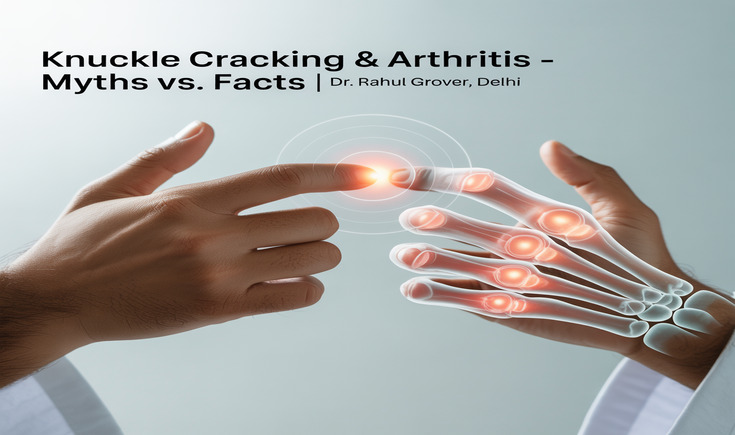
A lot of people have a habit of cracking their Knuckle cracking myths vs facts. It feels satisfying and is almost like releasing built-up tension in your hands. But a very common question is, does knuckle cracking lead to arthritis? Many patients bring up this concern during consultations and let’s see if it is right or wrong.
What Actually Happens When You Crack Your Knuckles?
All our joints are surrounded by a protective capsule filled with synovial fluid. The same is the case with your knuckles. This fluid is like a natural lubricant, helps to prevent friction to move your joints smoothly.
When you crack a Knuckle cracking myths vs facts, you are basically creating a small space between the bones. This leads to a shift in pressure that pulls the synovial fluid into the gap. The pop sound is due to the bubbles forming and bursting inside the fluid.
With time, repeated cracking can loosen the ligaments, due to which some people notice their knuckles crack more easily than before.
Does Knuckle Cracking Really Cause Arthritis?
Knuckle cracking does not directly lead to arthritis. Arthritis starts when the cartilage in the joints weakens due to age, genetics, injuries, or other medical conditions.
Many studies have been done to find out if cracking knuckles and arthritis are connected in any way, but none have shown a clear connection.
However, there can be other consequences. People who crack knuckles regularly may experience:
- Mild hand swelling
- Reduced grip strength
- Looser ligaments over time
So, arthritis is not a risk here but there are functional drawbacks of continuing this habit.
Breaking the Habit of Knuckle Cracking
For many, knuckle cracking is an unconscious habit. If you want to stop, the following are some simple strategies that you can follow:
- Keep your hands busy – Use a stress ball, pen, or coin to keep your hands occupied.
- Distract yourself – Start doing some other task when you feel like cracking your knuckles.
- Try reminders – Wearing a rubber band on your wrist and snapping it gently can stop you mid-action.
- Get professional help – If it feels like a compulsion, a doctor or therapist can guide you with behaviour changing strategies.
Are There Any Benefits to Cracking Knuckles?
After cracking knuckles, some people feel that their hands feel looser and more flexible for some time. For some individuals it is also a stress reliever. But the benefits are short-lived, and there’s no long-term health advantage.
Final Thoughts
Knuckle cracking myths vs facts does not cause any harm, and it does not cause arthritis. The main problem is that there can be hand weakness or swelling if it is overdone. If you notice discomfort, pain, or stiffness in your joints, consult an orthopedic specialist like Dr. Rahul Grover. He can guide you with the right tests and scans and start with treatment if needed.
So, the next time you crack your knuckles, remember it is not going to cause arthritis or create any damage to your joints. But breaking this habit will help to protect your grip strength in the long run.
Had a great experience with us? We’d love to hear your thoughts! Click here to leave a Google review and share your feedback.