Knee Joint Arthroscopy Explained: Procedure, Recovery, and Patient Benefits
When knee pain refuses to settle, and scans show cartilage or ligament problems, your doctor may recommend knee joint arthroscopy. For many people, the word “surgery” feels scary. You may think:
- Is it a big operation?
- Will I really recover quickly?
- Do only athletes undergo this procedure?
As an orthopaedic specialist, Dr. Rahul Grover helps patients understand how this surgery would be beneficial for them. This guide will explain knee joint arthroscopy, clear up doubts, and share what you can expect from recovery.
Understanding Knee Joint Arthroscopy
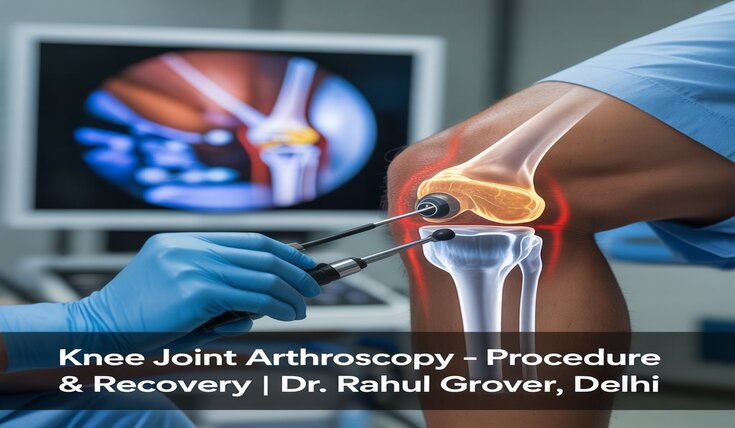
Knee joint arthroscopy is a surgery where a tiny camera is put into the joint to see the inside of the knee and correct the problems at the same time. It is used for:
- Torn meniscus or ligament injuries.
- Cartilage damage.
- Persistent swelling (synovitis).
- Loose fragments of bone or cartilage.
Because it is minimally invasive, most patients heal faster compared to traditional open surgery.
Who Benefits From Knee Joint Arthroscopy?
This procedure is not limited to sports professionals. People of all ages may benefit if they have:
- Pain that hasn’t improved with medication or physiotherapy
- Sudden locking or catching of the knee.
- Recurrent swelling.
- Instability after an injury.
This surgery, for many patients, becomes the turning point that restores mobility and reduces pain.
Myths About Knee Joint Arthroscopy
1 Myth : It’s only for athletes.
Reality: Non-athletes with arthritis or cartilage problems may also need it.
2 Myth: It’s a risky surgery.
Reality: The procedure is quick, low-risk, and done as day surgery.
3 Myth: Recovery takes months.
Reality: Most people walk within days and resume normal life in a few weeks.
What Happens During the Procedure?
The operation generally takes an hour. Using the arthroscope, the surgeon identifies the damaged area and repairs or removes it. Only tiny stitches are required, leaving minimal scarring. Many patients are able to go home the same day.
Recovery Timeline After Knee Joint Arthroscopy
Healing depends on the type of repair done, but the general recovery looks like this:
- First few days: swelling controlled with ice packs and rest
- 1 week: back to light desk work
- 2–6 weeks: physiotherapy exercises to rebuild strength and movement
- 4–6 weeks: return to sports or more demanding activities
Commitment to physiotherapy is the key to a smooth recovery.
When Should You See a Specialist?
Consider consulting Dr. Rahul Grover about this process if you have:
- Ongoing pain despite non-surgical treatments
- Knees that lock, catch, or feel unstable
- Swelling that keeps returning
- An injury followed by difficulty bending or walking
Early medical advice prevents worsening damage and makes treatment more effective.
Final Word
Knee joint arthroscopy is a safe solution for knee pain that doesn’t improve with other methods. It helps in quick diagnosis, targeted treatment, and a faster recovery.
With Dr. Rahul Grover’s expertise, patients receive individualised evaluation, advanced surgical care, and guided rehabilitation to achieve the best outcome. If knee pain is affecting your lifestyle, now may be the right time to explore this minimally invasive option.
Had a great experience with us? We’d love to hear your thoughts! Click here to leave a Google review and share your feedback.