Fractured Elbow Surgery: Treatment and Healing Time
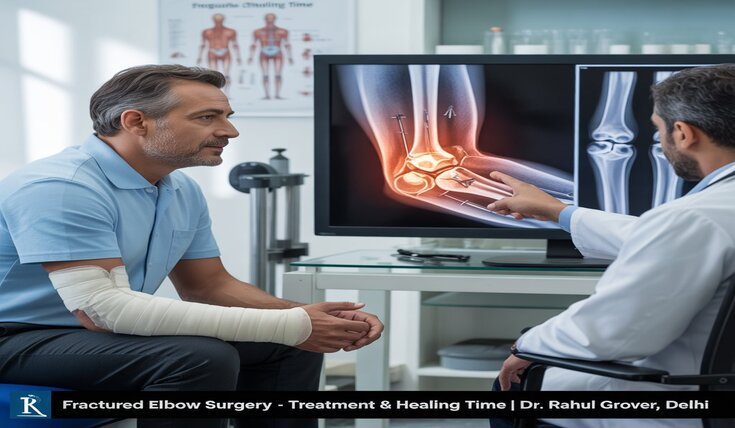
A complex Fracture elbow surgery injury needs expert orthopaedic care. When a fracture severely disrupts the joint, traditional treatment is simply not enough. Understanding the precise surgical procedure and setting realistic recovery expectations are essential steps toward regaining full function.
Key Treatment Approaches for Elbow Fractures
Fracture elbow surgery aims to restore the joint’s anatomy and stability, which is vital for long-term mobility. The decision for surgery depends on the fracture’s pattern, displacement, and whether it involves the joint surface.
Fracture Type
Common Surgical Technique
Fixation Hardware Used
Olecranon (Pointy tip of the elbow)
Tension Band Wiring or Plating
Wires, Pins, Contoured Plates, and Screws
Radial Head (Top of the forearm bone)
Internal Fixation or Replacement
Small Screws, Plates, or a Radial Head Implant
Distal Humerus (Lower end of the upper arm bone)
Double Plating and Screws
Specialized Plates and Multiple Screws
This surgical process, often termed Open Reduction and Internal Fixation (ORIF), involves carefully re-aligning the bone fragments and securing them with metal implants. This fixation ensures the bones heal in the correct position.
The Objective Healing Timeline
Recovering from fracture elbow surgery takes time, patience, and steady effort. Doctors usually divide the healing journey into different phases to make progress clear and manageable.
Phase 1: Initial Post-Op (1-2 Weeks):
Goal: Keep the operated area safe and control any pain or swelling.
Action: You’ll wear a protective cast or splint for a short time. The surgeon encourages you to keep moving your fingers, wrist, and shoulder gently so that they stay flexible and pain-free.
Phase 2: Early Mobilization (2-6 Weeks):
Goal: Help your elbow move freely without stiffness.
Action: Gentle physiotherapy starts now. You follow doctor-approved movements that safely improve your elbow’s bending and straightening. This motion is important as it helps to prevent joint stiffness.
Phase 3: Strengthening (6-12+ Weeks):
Goal: Rebuild muscle strength and endurance.
Action: Once X-rays show good bone healing, you can start with strengthening exercises. There is a steady return to light, daily activities, but strictly avoid heavy lifting.
Phase 4: Full Return:
Bone Healing: Full biological healing for a major fracture usually takes 3 to 4 months.
Functional Recovery: Returning to manual work or demanding sports can take 6 to 12 months.
Common Risks of Fracture Elbow Surgery
While modern surgery is highly successful, you must acknowledge potential risks:
- Joint Stiffness: This is the most common concern after any fracture elbow surgeryand emphasises the need for diligent physical therapy.
- Non-union or Mal-union: The bone may heal slowly, or in a slightly abnormal position, sometimes requiring further surgery.
- Hardware Issues: The metal implants may occasionally become prominent or cause irritation, necessitating their removal after the bone heals (usually a year later).
- Nerve or Blood Vessel Injury: The surgeon takes precautions, but nerves, espe cially the Ulnar nerve, can be vulnerable around the elbow joint.
For orthopaedic expertise in managing complex elbow trauma, consider consulting Dr. Rahul Grover, a skilled specialist in Delhi with a strong focus on detailed diagnosis and treatment plans made as per the needs of the patient for fracture elbow surgery recovery.
Had a great experience with us We’d love to hear your thoughts! Click here to leave a Google review and share your feedback.

About Dr Rahul Grover
Dr. Rahul Grover is a highly respected orthopaedic surgeon known for advanced joint replacement, arthroscopy, spine care, fracture management, and sports orthopaedics.
Know More