Types of Shoulder Surgery: Options for Pain Relief and Healing
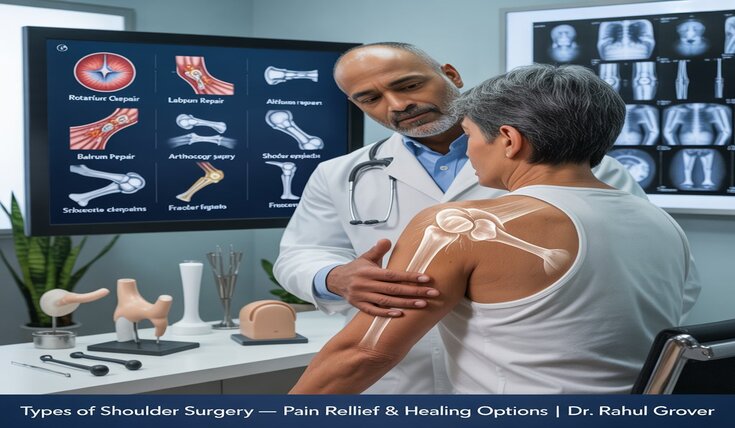
Many people live with shoulder pain that disrupts basic actions—reaching up, rotating the arm, or lying on one side. When these activities start feeling difficult every day, it becomes important to learn about the different types of shoulder surgery that can address the root cause of the problem. Knowing the options gives patients confidence and direction.
Dr. Rahul Grover offers thorough assessments and clear explanations so patients understand exactly what their shoulder needs. His structured approach ensures relief, improved motion, and lasting joint support.
When Surgery Makes Sense
Some signs show that surgery may support better recovery:
- Pain lasts longer than expected
- Movements feel tight or limited
- The shoulder struggles with strength
- Injuries stop natural healing
At this stage, understanding the types of shoulder surgery becomes essential for making the right choice.
1. Rotator Cuff Repair
A torn rotator cuff affects power and lifting ability. Dr. Rahul Grover explains how this surgery restores proper tendon function.
Benefits include:
- Better shoulder strength
- Relief from long-standing pain
- Improved overhead movement
This stands out among the types of shoulder surgery commonly chosen when tendons refuse to heal naturally.
2. Labrum Repair
The labrum supports stability. A tear makes the shoulder feel loose or “slippy.”
Why patients choose it:
- Stronger joint stability
- Fewer chances of repeated dislocation
- Comfort during sports and overhead work
For athletes, this is one of the most important types of shoulder surgery available.
3. Arthroscopic Repair
This involves a small camera and tiny instruments.
Arthroscopy helps with:
- Small tendon tears
- Inflammation
- Loose cartilage fragments
- Motion problems
Because it uses small incisions, it becomes one of the gentler types of shoulder surgery, making recovery smoother.
4. Shoulder Replacement
For advanced arthritis or severe joint damage, a replacement offers long-lasting comfort.
Advantages:
- Smooth and natural movement
- Noticeable pain reduction
- Strong and steady function
It remains one of the more advanced types of shoulder surgery, especially for older adults with long-standing joint wear.
5. Fracture Fixation
Fractures around the shoulder are common after sudden falls or injuries. In these cases, surgical fixation helps realign the bones so they heal in the right position, making recovery smoother and more dependable.
This option:
- Improves bone alignment
- Restores balanced movement
- Supports faster recovery
Among the types of shoulder surgery, fracture management plays a major role in trauma care.
Recovery Tips from Dr. Rahul Grover
Recovery feels more structured when patients follow a planned routine:
- Attend physiotherapy sessions
- Move the shoulder only as advised
- Use a supportive pillow while sleeping
- Keep meals rich in protein, calcium, and vitamins
- Follow a gradual return-to-activity timeline
Healing time varies across the types of shoulder surgery, but consistency supports better outcomes.
Final Thoughts
Understanding the types of shoulder surgery gives patients a sense of control during the treatment journey. With Dr. Rahul Grover’s guidance, patients receive clear explanations, personalised treatment plans, and ongoing support. This approach helps them manage symptoms effectively and regain long-term comfort and mobility.
Had a great experience with us? We’d love to hear your thoughts! Click here to leave a Google review and share your feedback.