Discover Spinal Surgery Types and Their Benefits for Recovery
Back and neck pain can stop people from living normally, and when symptoms continue despite physiotherapy or medication, many patients begin exploring different spinal surgery types. Understanding about the different types of surgeries can help people recognise which option might suit their condition best.
Under the guidance of Dr. Rahul Grover, patients receive clear explanations, practical advice, and well-structured support at every stage of their surgical journey.
Why Understanding Spinal Surgery Matters
Different problems within the spine require different solutions. Learning about various spinal surgery types makes it easier for patients to make informed decisions. The appropriate surgery can take pressure off compressed nerves, strengthen the spine, ease long-term discomfort, and help you move more freely. With timely treatment, recovery doesn’t have to be prolonged or complicated.
The Main Spinal Surgery Types Explained
Every spine condition behaves differently. The following are the most common spinal surgery types performed today:
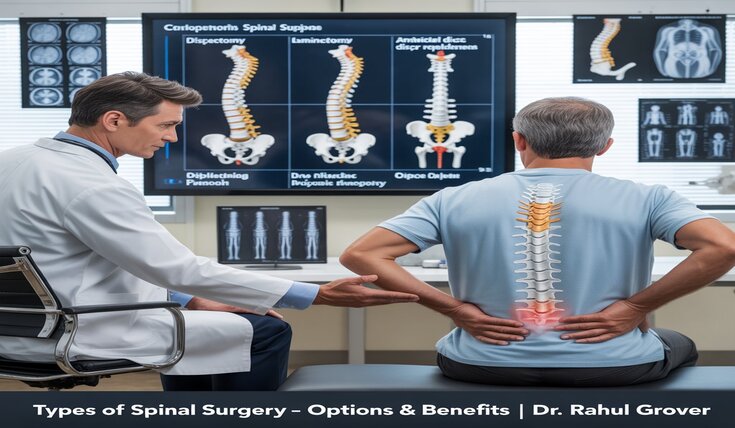
1. Discectomy
This procedure helps to remove a damaged or slipped disc that presses on surrounding nerves. It provides quick relief from radiating leg or arm pain and is widely used when conservative care fails.
2. Laminectomy
Surgeons remove a small section of bone at the back of the spine to relieve pressure caused by narrowing spinal canals. This surgery is great for conditions such as age-related degeneration, stiffness, and nerve compression.
3. Spinal Fusion
Fusion surgery joins two or more vertebrae together to give the spine better stability. It is especially helpful for conditions like fractures, spinal deformities, severe arthritis, and significant instability. Among all spinal surgery options, fusion is known for offering long-lasting support and strength.
4. Artificial Disc Replacement
Rather than restricting motion, this technique restores movement by inserting an artificial disc in place of the worn one. Many younger and active patients benefit from this, as it helps them maintain natural flexibility.
5. Minimally Invasive Techniques
With the introduction of minimally invasive methods, surgeons now operate through very small openings using specialised cameras and refined instruments. This approach leads to quicker healing, less discomfort, and shorter hospital stays for most patients.
Knowing the distinctions between these types of spinal surgeries empowers patients. It reduces fear, builds trust, and helps them feel informed throughout the decision-making process.
Benefits You Can Expect
Each surgery offers its own set of advantages, but most procedures lead to:
- Reduced nerve-related pain
- Better balance and posture
- Stronger spinal support
- Return to everyday movement
- A lower chance of long-term complications
These improvements highlight why learning about spinal surgery types is so important.
Guidance from Dr. Rahul Grover
Surgical decisions should always be made by the patient himself. That’s why Dr. Rahul Grover evaluates everything—your symptoms, imaging tests, strength levels, and lifestyle demands—before suggesting any procedure. His careful and thoughtful approach ensures every patient receives treatment that is safe, suitable, and effective.
Final Thoughts
Exploring the different spinal surgery types gives patients clarity and confidence. With the right medical guidance, a well-planned treatment approach, and committed rehabilitation, most patients are able to regain movement, reduce pain, and gradually return to an active lifestyle with confidence.
Had a great experience with us? We’d love to hear your thoughts! Click here to leave a Google review and share your feedback.