Types of Elbow Surgery: Treatment Options & Procedures
The elbow is a busy joint that helps us do many things every day, like tying shoelaces, colouring, or playing catch. The elbow joint helps us to bend and straighten our arm without us even thinking about it. But injury or wear and tear can make it stiff and painful, making even simple activities difficult. Moreover, at times medicines and exercises do not help and this is when surgery becomes the only option to make the joint normal again. There are different types of elbow surgery and knowing about them helps patients understand how doctors will treat the issue and help the arm move freely again.
Dr. Rahul Grover, an experienced orthopaedic doctor, believes that if patients are clear about the different types of elbow surgery, they can have a faster recovery and the process will become less scary for them.
Why Elbow Surgery May Be Needed
Elbow issues can occur for many reasons. A fall, a sports injury, or a long-term strain can damage the bones, ligaments, or even nerves. Surgery becomes the only option when other methods such as medicines, rest, or physiotherapy fail to provide relief.
Doctors may suggest to go for surgery if:
- The elbow feels stiff or stuck.
- Pain does not go away.
- Bones break after a fall.
- The elbow keeps slipping out of place.
- Nerves cause tingling or numbness.
This is where different types of elbow surgery come into play.
Common Types of Elbow Surgery Explained Simply
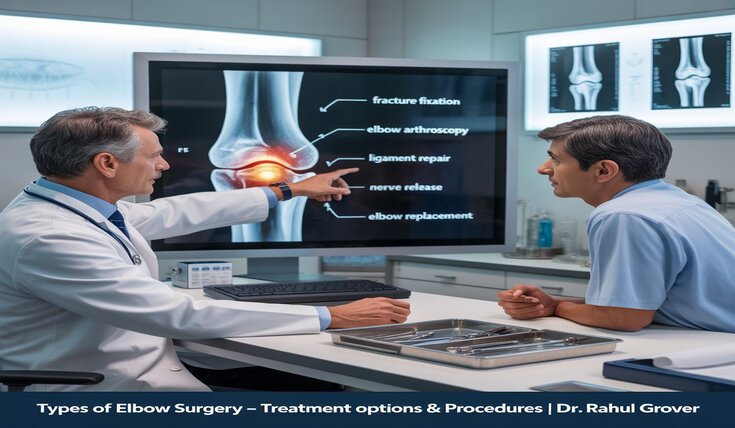
1. Fracture Fixation Surgery
If a bone breaks near the elbow, doctors may use plates or screws to hold it in place. This helps the bone heal in the right position.
2. Elbow Arthroscopy
This is a gentle procedure. Doctors use a small camera to look inside the elbow and fix small problems. Among the types of elbow surgery, this one usually heals faster.
3. Ligament Repair Surgery
Ligaments help to keep the elbow stable. If there is a ligament tear, the elbow may feel weak. Surgery helps to repair the ligaments so the joint can feel strong again.
4. Nerve Release Surgery
At times nerves get trapped near the elbow. This can result in tingling or numbness in the fingers. In this case, surgery frees the nerves and improves the numbness.
5. Elbow Replacement Surgery
In severe arthritis or damage, doctors replace the elbow joint with an artificial one. This is one of the advanced types of elbow surgery.
What Happens After Surgery
After surgery, the elbow needs rest and care. Patients wear a sling for support. Physiotherapy helps restore movement and strength slowly.
Dr. Rahul Grover guides patients through recovery step by step so they feel safe and confident.
Final Thoughts
Understanding the types of elbow surgery removes fear and confusion. With the right treatment and proper care, most people return to daily activities without pain. Under the expert guidance of Dr. Rahul Grover, elbow surgery can become a clear and not so scary journey with a completely manageable recovery process.
Had a great experience with us? We’d love to hear your thoughts! Click here to leave a Google review and share your feedback.