Broken Leg Surgery in Delhi
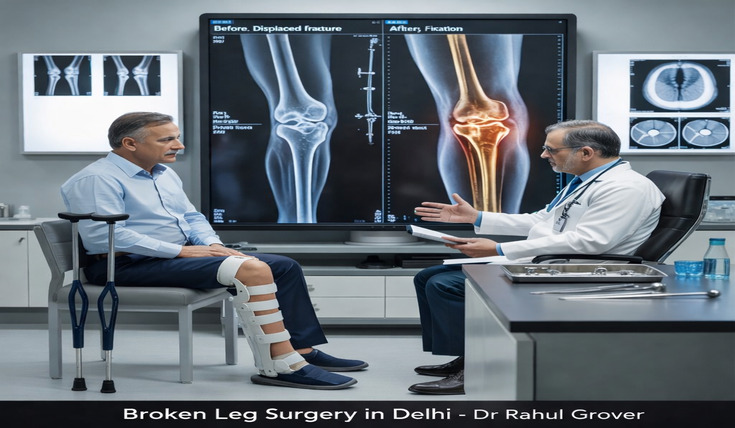
A broken leg is not just a painful injury—it can stop a person from walking, working, and managing everyday life. Fracture can happen due to many reasons such as a fall, accident, or sports injury. In any of these cases proper treatment is important to bring back strength and movement. In certain complex cases, broken leg surgery is the safest option to make sure that the bone heals correctly. Under the care of Dr. Rahul Grover, patients in Delhi receive structured treatment plans designed for stable healing and long-term mobility.
Understanding Leg Fractures
The leg contains strong bones such as the femur, tibia, and fibula. When one of these bones breaks, the injury may range from a small crack to a complete break with displacement. High-impact accidents often cause severe fractures, while weaker bones may break even after minor falls.
Not all fractures look the same. Some remain aligned, while others shift out of place. broken leg surgery becomes necessary when natural alignment cannot be maintained with a cast alone.
When Surgery Becomes Necessary
Dr. Rahul Grover evaluates each fracture carefully using imaging and physical assessment. Surgery is usually recommended when:
- The broken bone shifts out of position
- Multiple fragments are present
- The fracture affects nearby joints
- The bone fails to stay stable in a cast
In these situations, broken leg surgery provides internal support so healing can begin correctly.
How Broken Leg Surgery Helps
During broken leg surgery, the broken bone is realigned and stabilised using rods, plates, or screws. This internal fixation holds the bone steady and allows early controlled movement. Dr. Rahul Grover chooses the surgical method based on fracture type, patient age, and activity level.
Modern techniques focus on accuracy and safety, which helps to reduce tissue damage and improve alignment during treatment. This careful approach lowers the risk of long-term complications such as limb shortening, joint stiffness, or limited movement after healing.
Recovery and Rehabilitation
The major part of any surgery is the recovery process. After going through a broken leg surgery, patients have to follow a structured and phased healing plan. The first stage focuses on reducing pain and swelling. Gradually, movement and weight-bearing begin under guidance.
Physiotherapy helps:
- Restore muscle strength.
- Improve balance and coordination.
- Prevent stiffness in nearby joints.
Most patients regain basic mobility within a few months, though full recovery may take longer depending on injury severity.
Why Timely Surgery Matters
Unstable fractures should not be ignored or delayed, as improper healing can result in visible deformity, ongoing pain, stiffness, and long-term walking problems. Timely broken leg surgery helps stabilise the bone, improve healing quality, and preserve movement and independence.
Final Thoughts
A broken leg can feel life-altering, but proper care makes recovery possible. With expert evaluation, precise surgical care, and structured rehabilitation, broken leg surgery under Dr. Rahul Grover supports safe healing and strong recovery. Patients are guided step by step so they can return to walking comfortably, resuming work routines, and living with confidence again.
Had a great experience with us? We’d love to hear your thoughts! Click here to leave a Google review and share your feedback.