
Bone Healing Phases Explained: From Fracture to Recovery
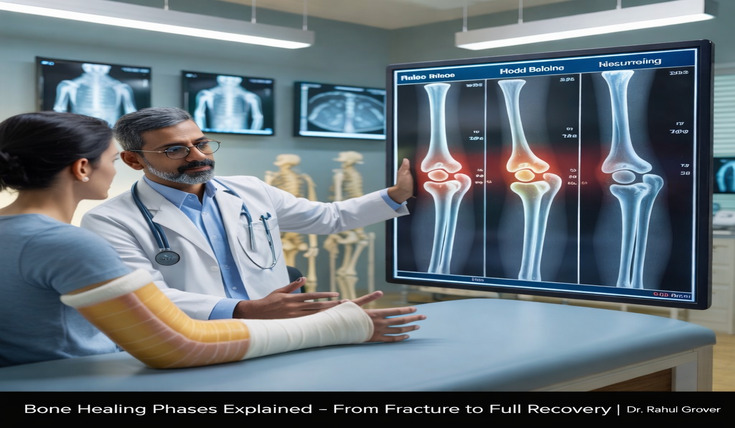
Breaking a bone can be scary—not only because of the pain, but because swelling and weakness can suddenly make normal life feel difficult. Many patients worry about whether healing will take months, whether the fracture will become strong again, and when they can return to routine activities without fear. Understanding the Bone Healing Phases helps patients feel more in control because it explains what is happening inside the body and why healing needs time. Dr. Rahul Grover explains the healing process clearly and guides patients through how the body repairs bone at each stage.
Bone healing doesn’t happen all at once. The body repairs the damaged area through planned biological stages. These steps ensure the safest and most stable recovery.
Why Bone Healing Follows Different Phases
Bones contain living cells, blood supply, and minerals. When a fracture happens, the body starts healing in a fixed order. These step-by-step bone healing phases ensure damaged, weak tissue is replaced with strong and stable bone.
Healing speed depends on:
- Age and general health.
- Type and location of fracture.
- Quality of bone.
- Blood supply to the area.
- Stability of the fracture.
- Lifestyle factors such as smoking and nutrition.
Dr. Rahul Grover explains that respecting each phase improves long-term strength and reduces complications.
Phase 1: The Inflammatory Response
The first of the bone healing phases begins within minutes of injury.
When the bone breaks:
- Blood collects around the fracture
- A clot forms to protect the area
- Inflammatory cells arrive to clean damaged tissue
Pain, warmth, and swelling appear during this stage. Although uncomfortable, this phase signals the start of healing. It usually lasts for a few days.
Phase 2: Formation of a Soft Callus
In the second of the bone healing phases, the body starts building a temporary bridge.
Special cells produce:
- Fibrous tissue
- Soft cartilage
This soft callus holds the broken ends together loosely. At this stage, the bone remains fragile, which is why casts, splints, or surgical fixation are important. This phase usually lasts two to three weeks.
Phase 3: Development of Hard Bone
The third of the bone healing phases strengthens the fracture.
The soft callus slowly changes into hard bone as minerals deposit into the tissue. During this phase, stability increases, pain eases, and movement starts improving. X-rays usually show clear healing progress.
This stage may last several weeks or months.
Phase 4: Remodelling and Final Strength
The final of the bone healing phases is when the bone remodels and becomes more natural in shape.
The body:
- Removes excess bone tissue
- Smooths rough edges
- Restores normal bone shape
This phase continues quietly for months, sometimes even years, until strength fully returns.
How Dr. Rahul Grover Supports Healing
Dr. Rahul Grover reviews healing progress regularly and adjusts treatment, physiotherapy, and activity recommendations accordingly. His approach focuses on safeguarding the fracture early and restoring strength over time.
Final Thoughts
Understanding the bone healing phases shows that recovery is a planned and intelligent process. With proper care, patience, and expert guidance from Dr. Rahul Grover, most fractures heal well and allow a safe return to everyday life.
Had a great experience with us? We’d love to hear your thoughts! Click here to leave a Google review and share your feedback.