
Hip Replacement Hemiarthroplasty: Procedure and Recovery
When hip pain starts to interfere with simple tasks such as walking, sitting, or climbing stairs, you should seek medical help. For patients with severe hip joint damage or fractures, surgeons usually recommend hip replacement hemiarthroplasty as the best option for improving mobility and reducing pain. This procedure relieves pain, restores movement, and improves daily comfort.
Understanding Hip Replacement Hemiarthroplasty
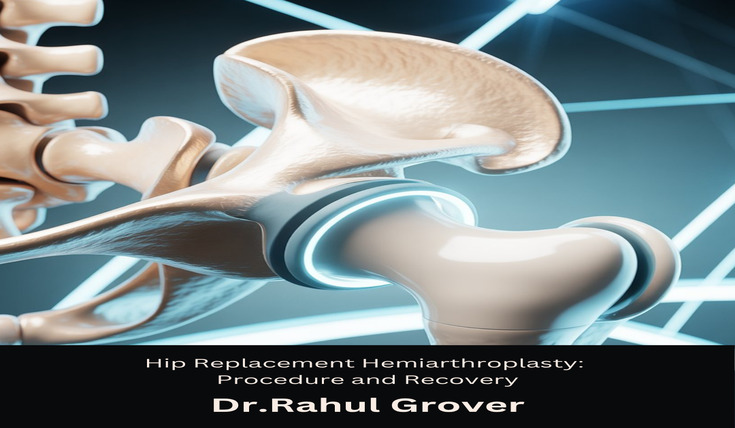
Hip replacement hemiarthroplasty is a type of partial hip replacement where only the damaged or fractured part of the hip joint. The part that is generally replaced with an artificial implant is the femoral head. In a hip replacement hemiarthroplasty the natural socket (acetabulum) of the hip is preserved, unlike total hip replacement.
It is usually done on older adults after hip fractures, especially those caused by falls or accidents. According to Dr. Rahul Grover, an experienced orthopaedic surgeon, hip replacement hemiarthroplasty can significantly improve mobility and reduce long-term pain in patients with limited bone damage. The procedure is designed as per the health of the patient, bone quality, and lifestyle, making sure that a personalized treatment plan is given.
The Procedure Step by Step
During hip replacement hemiarthroplasty, the damaged femoral head is carefully removed and replaced with an artificial part. This artificial head easily fits into the natural hip socket of the patient and helps in smoother joint movement. The surgery usually takes a few hours and is done under anaesthesia.
After the implant is placed, surgeons carefully check its stability and alignment to ensure proper joint function. Once the incision is closed, physiotherapy starts soon after to help patients rebuild strength and restore smooth movement.
Recovery and Healing
Recovery after hip replacement hemiarthroplasty is different for every person. Factors like age, overall health, and physical fitness play an important role in how quickly one regains strength and mobility. Most patients start to stand and walk with support within a few days of surgery. Physiotherapy starts post the surgery, which helps to strengthen the muscles surrounding the hip and leads to improvement in flexibility as well.
After the surgery, every patient is given some instructions regarding the after care, which should be followed very carefully. Dr. Rahul Grover advises patients to avoid twisting movements, and use walking aids during the early recovery period. With proper care, many patients are able to get back to their normal level of activities within 6 to 12 weeks.
Long-Term Results
The results of hip replacement hemiarthroplasty are really good when done by skilled surgeons. It helps patients to get back their independence and enjoy their life without pain. You can extend the lifespan of your implant by maintaining a healthy weight, staying active with low-impact exercises, and keeping up with regular follow-up appointments.
Final Thoughts
For individuals who are dealing with severe hip pain or fractures, hip replacement can be a life-changing decision. Under the expert guidance of Dr. Rahul Grover, patients receive personalized care that helps to restore movement, ease pain, and help them return to a more active and comfortable lifestyle.
Had a great experience with us? We’d love to hear your thoughts! Click here to leave a Google review and share your feedback