Bone Tumour Classification: Types, Diagnosis and Facts
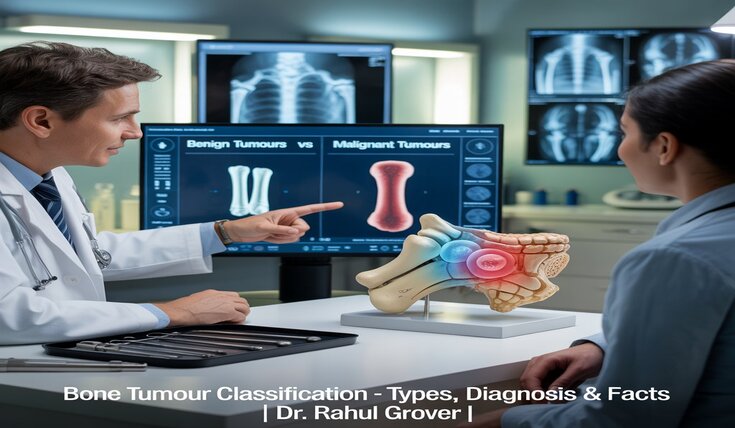
Hearing the word tumour can sound scary, especially when it relates to the bones. But not every bone tumour is dangerous or life-threatening. When families understand Bone Tumour Classification, they can tell the difference between what is serious and what can be treated easily.
Dr. Rahul Grover, a trusted bone and joint doctor, says that many bone tumours can be treated well if patients get help early. Quick care often leads to faster healing and better recovery. With the right diagnosis and treatment plan, most people can recover well.
What Bone Tumour Classification Means
Bone Tumour Classification helps doctors understand how different bone tumours act. Some are benign, which means they don’t cause cancer. Others are malignant, which means they are cancerous and need stronger and quicker treatment.
Benign tumours start slow and don’t spread to other parts of the body. Malignant tumours grow quickly and affect other organs as well if not treated in time. Knowing the kind of tumour helps doctors choose the right treatment.
Types of Bone Tumours
In Bone Tumour Classification, the two main types are benign and malignant.
Benign tumours include:
- Osteochondroma:This is common in children and teens. It grows near the ends of long bones, like the thigh or upper arm.
- Enchondroma:This type grows inside the bone and causes mild pain or swelling.
- Giant Cell Tumour:This one appears around the knee and can make the bone weak or painful.
Malignant tumours are more serious. The main ones are:
- Osteosarcoma:This cancer starts in the bone itself and is more common in teenagers.
- Chondrosarcoma:This starts in the cartilage.
- Ewing’s Sarcoma:This affects children and young adults, particularly in the legs, arms, or pelvis.
Each type is different, so before deciding the treatment the doctors carefully study how it grows.
How Doctors Diagnose Bone Tumours
Dr. Rahul Grover starts with symptoms like bone pain, swelling, or trouble moving. Then, he uses imaging tests such as X-rays, MRIs, or CT scans to see where and how big it is.
To confirm the diagnosis, a biopsy is done. This helps to understand what kind of tumour it is and helps decide the next steps.
Treatment and Recovery
After confirming the Bone Tumour Classification, treatment begins.
If the tumour is benign, doctors may just monitor it or remove it with a small surgery.
If the tumour is malignant surgery, chemotherapy, or radiotherapy are used to remove and control it.
Dr. Rahul Grover and his team always aim to keep the bone strong and help patients walk and move comfortably again. Physiotherapy and regular follow-ups are a big part of healing.
Important Facts About Bone Tumours
- Most bone tumours are not cancerous.
- Detecting them early helps you recover faster.
- Children and teenagers often get certain types of bone tumours.
- Proper diagnosis ensures the right Bone Tumour Classificationand treatment plan.
In Simple Words
Once patients learn about Bone Tumour Classification, they feel less worried. Dr. Rahul Grover helps them recover strength, movement, and hope. With timely treatment and the right support, healing truly becomes possible.
Had a great experience with us? We’d love to hear your thoughts! Click here to leave a Google review and share your feedback