Shoulder Arthroplasty: Benefits, Procedures, and Recovery
Shoulder pain that limits movement can affect nearly every part of your daily routine be it lifting objects or sleeping comfortably. When damage inside the joint becomes severe, shoulder arthroplasty is one of the most effective treatments the helps to being back mobility and reduce pain. This guide explains the condition, treatment steps, and what recovery looks like so you know exactly what to expect.
What Is Shoulder Arthroplasty?
Shoulder arthroplasty is a surgical procedure that replaces damaged parts of the shoulder joint with artificial parts. These components help in natural movement through which patients regain function. People who choose shoulder typically suffer from advanced arthritis, severe fractures, or long-standing rotator cuff disease that has not improved with other treatments.
Why Shoulder Arthroplasty Is Needed
As the shoulder joint wears down, the cartilage gradually disappears, resulting in discomfort and reduced movement. This degeneration can also cause grinding or catching sensations.
If the bone is damaged beyond repair due to trauma or fracture, reconstruction may not work. Joint replacement then becomes the preferred treatment.
Common reasons why people choose shoulder arthroplasty or why it is recommended are:
- Persistent pain that interferes with daily tasks.
- Ongoing stiffness despite medication or physiotherapy.
- Shoulder fractures that did not heal correctly.
- Age-related degeneration or long-term joint conditions.
- Weakness caused by rotator cuff damage.
Types of Shoulder Arthroplasty
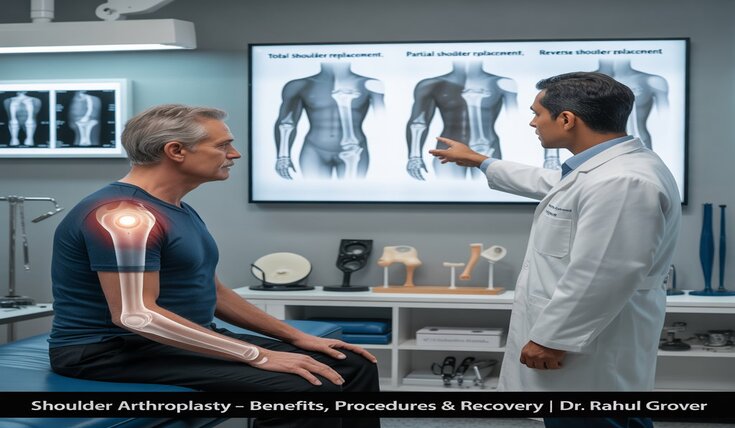
Knowing the main types of shoulder arthroplasty can make treatment decisions easier:
Total Shoulder Replacement
This replaces both sides of the joint and is best when cartilage wear affects the entire shoulder.
Partial Shoulder Replacement
This replaces just the ball, a common choice for major fractures of the humeral head.
Reverse Shoulder Replacement
The positions of the ball and socket are reversed. This option works well for patients whose rotator cuff tendons are seriously damaged.
Your surgeon will recommend the most suitable type based on your condition, bone structure, and movement requirements.
What the Procedure Involves
During shoulder arthroplasty, the surgeon carefully removes the worn bone and cartilage, shapes the joint surfaces, and fits the implants in place. The surgery usually lasts one to two hours, and guided movement starts soon after to reduce the risk of stiffness.
Recovery After Shoulder Arthroplasty
Recovery timelines vary, yet most patients progress through similar healing stages.
- First 2 weeks: Discomfort decreases, and swelling gradually goes down.
- Weeks 3–6: Physiotherapy helps restore early shoulder mobility.
- Months 2–3: Strength-building exercises improve overall function.
- Months 4–6: Most people return to daily activities with improved comfort.
Following your surgeon’s instructions is essential to getting the best results from shoulder arthroplasty.
Final Thoughts
Shoulder is a reliable and well-established procedure that provides lasting pain relief, smoother movement, and a noticeable improvement in day-to-day comfort. For many patients, it becomes the turning point in managing long-standing shoulder problems.
With an accurate diagnosis, a well-planned treatment approach, and committed rehabilitation, most people regain strong, steady shoulder function. They are able to return to work, hobbies, and daily routines with confidence and far less discomfort.
Had a great experience with us? We’d love to hear your thoughts! Click here to leave a Google review and share your feedback.