Total Shoulder Arthroplasty: Indications, Procedure and Recovery
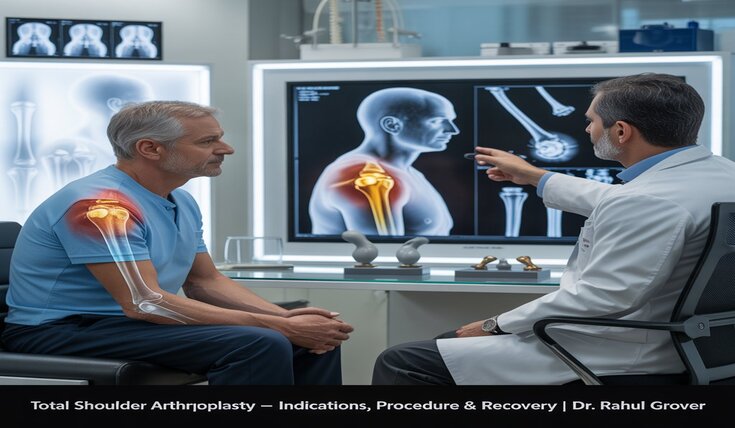
When shoulder pain continues for weeks or months, it often grows into a bigger issue, limiting daily activities and affecting how people feel day to day. When conservative treatments no longer help, total shoulder arthroplasty becomes a strong option. This surgery replaces the worn-out joint so the shoulder can move smoothly again. At this point, having Dr. Rahul Grover guide you through the process makes the decision much easier and clearer.
When Total Shoulder Arthroplasty Becomes Necessary
The shoulder consists of a ball and socket joint. Total shoulder arthroplasty is recommended when both the ball and the socket of the joint are affected. These conditions include:
- Severe osteoarthritis.
- Rheumatoid arthritis.
- Complex fractures.
- Rotator-cuff–related arthritis.
- Long-lasting pain that does not improve with physiotherapy or injections.
To know if total shoulder is suitable, the surgeon doesn’t just rely on one test. They look at shoulder strength, range of motion, and detailed X-ray findings. They also talk to the patient about their lifestyle and recovery goals. Putting all of this together helps determine whether a replacement is the best way to ease pain and improve daily movement. Experts like Dr. Rahul Grover make sure these details are explained in a simple, transparent way.
Understanding the Procedure
During total shoulder arthroplasty, the damaged sections of the shoulder joint are taken out and replaced with modern implants designed to mimic natural movement. Once fitted, these parts allow the joint to glide more freely, easing discomfort and improving overall mobility.
During surgery, specialists use modern tools and methods to make sure the implants sit exactly where they should. When aligned correctly, the shoulder functions better, stays comfortable for years, and moves more naturally. This level of accuracy ultimately helps patients get back to normal life without hesitation.
The First Phase of Recovery
Recovery starts within hours of surgery. A sling is used to protect the shoulder, and simple guided movements start soon after. These gentle movements encourage healing and help avoid early stiffness.
Physiotherapists guide patients throughout the early weeks. They teach controlled movements and help reduce swelling and discomfort. This early stage plays an important role in the overall success of total shoulder arthroplasty.
Rehabilitation and Progress
A structured rehabilitation plan shapes the healing journey:
1–3 Weeks
Gentle mobility exercises begin while the sling offers support.
4–8 Weeks
Movement improves. Patients gain flexibility and begin light exercises.
9–12 Weeks
Strengthening starts. The shoulder becomes more stable.
After 3 Months
Many people feel major relief after surgery and gradually return to normal activities. Regular physiotherapy plays a key role—it builds strength, improves movement, and ensures patients get the best possible results from total shoulder arthroplasty.
Long-Term Results
Most patients enjoy long-lasting comfort after total shoulder arthroplasty. The artificial components reduce pain, support smoother movement, and help maintain joint function for years.
Final Thoughts
For suitable candidates, total shoulder arthroplasty offers a strong chance of returning to a pain-free and active life. With the correct diagnosis, expert surgical care, and proper rehabilitation, patients experience reliable and lasting improvement.
Had a great experience with us? We’d love to hear your thoughts! Click here to leave a Google review and share your feedback.