
Essential Hip Replacement Exercises for Faster Healing
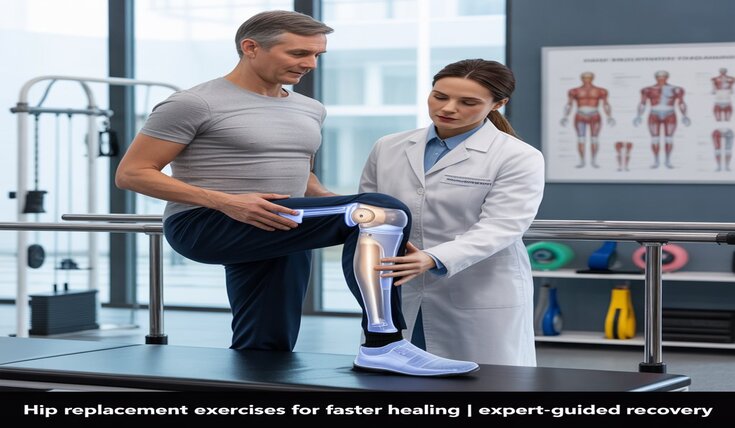
Hip replacement surgery marks the beginning of the recovery journey, not the end of it. While the operation corrects the joint problem, true recovery depends on how well the body heals afterward. With proper medical guidance and a structured movement plan, patients regain strength safely, reduce stiffness, and return to normal daily activities with confidence. Hip replacement exercises support the muscles as they adapt to the new hip and become stronger over time. Under the care of Dr. Rahul Grover, patients follow structured rehabilitation programmes designed for gradual and comfortable recovery.
Why Exercises Play a Key Role in Recovery
After surgery, it is common for the muscles around the hip to feel tight, stiff, and weak. Limited movement during this time can slow healing and make walking feel uncertain. By doing hip replacement exercises, patients help their muscles become active again, improve blood flow, and regain better control of movement.
Dr. Rahul Grover recommends early movement so that you have less stiffness with a smoother and a faster recovery. Each exercise targets a specific goal, whether it improves strength, flexibility, or coordination.
Early Recovery Exercises: Regaining Basic Movement
During the first few days after surgery, patients begin gentle exercises under supervision. These movements protect the joint while encouraging blood flow and muscle activation.
Common early hip replacement exercises include:
- Ankle pumps, where patients move their feet up and down to improve circulation.
- Heel slides, where patients slowly bend and straighten the operated leg while lying down.
- Quadriceps tightening, used to wake up and strengthen thigh muscles.
- Short assisted walks, which help patients feel comfortable walking again.
These exercises help patients feel comfortable with movement without placing stress on the new hip.
Dr. Rahul Grover recommends early movement so that you have less stiffness with a smoother and a faster recovery. Each exercise targets a specific goal, whether it improves strength, flexibility, or coordination.
Strengthening Exercises: Supporting the New Hip
Dr. Rahul Grover suggests starting with strengthening exercises when pain reduces and healing improves. These movements help to make those muscles strong that help to support the hip joint while we are walking or standing.
Strength-focused hip replacement exercises include:
- Straight leg raises to build thigh strength
- Standing hip abduction, where patients move the leg sideways to improve stability
- Seated knee extensions to strengthen the quadriceps
- Sit-to-stand practice to improve daily functional movement
These exercises help patients regain control and reduce dependence on walking aids.
Balance and Mobility Exercises
As patients slowly return to daily activities, balance training becomes very important. Gentle balance exercises help prevent falls and improve body coordination.
Patients practice:
- Standing on one leg with support.
- Slow, controlled walking patterns.
- Step-up exercises for stair confidence.
- These hip replacement exercises improve posture and walking symmetry.
Consistency and Professional Guidance Matter
When a patient follows his/her exercise routine regularly, it helps to build strength and confidence over time. Avoiding sudden movements reduces the risk of discomfort or setbacks during recovery. By regularly reviewing progress, Dr. Rahul Grover adapts exercises to suit each patient’s healing speed and ease.
Conclusion
Recovery after surgery becomes more effective with the right hip replacement exercises. Guided by Dr. Rahul Grover, patients improve strength and balance, helping them return to routine activities comfortably.
Had a great experience with us? We’d love to hear your thoughts! Click here to leave a Google review and share your feedback.