Hip Replacement Causes and Risk Explained
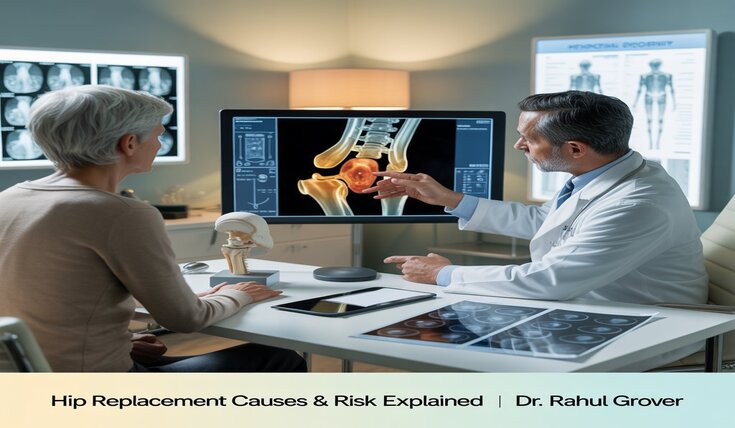
In most cases, hip pain develops over time rather than appearing suddenly. As joint damage advances, it can interfere with walking, sitting comfortably, resting at night, and performing routine daily activities, often leading to reduced mobility. Understanding hip replacement causes gives patients clarity about when joint deterioration has reached an advanced stage. Through careful evaluation and risk assessment, patients are guided toward informed decisions about whether hip replacement surgery is the most suitable next step.
What Leads to Hip Replacement Surgery?
Hip replacement causes are generally associated with progressive joint damage rather than sudden injury. The hip joint depends on intact cartilage to support smooth motion between the ball and socket. Loss of this cartilage leads to stiffness, pain, and difficulty with movement.
The most common hip replacement causes are as follows:
- Osteoarthritis that gradually erodes protective cartilage.
- Rheumatoid arthritis causing long-term joint inflammation.
- Poorly healed hip injuries from the past.
- Avascular necrosis affecting bone strength due to poor blood supply.
As these conditions advance, mobility decreases and quality of life is affected.
How Daily Life Contributes to Hip Damage
Certain hip replacement causes arise silently due to routine lifestyle patterns. Prolonged sitting, lack of regular exercise, and improper posture can reduce muscle strength and joint stability. As a result, the hip joint bears extra pressure, which may lead to worsening pain and degeneration over time.
Excess body weight also adds pressure to the hip. Each extra kilogram increases joint load, speeding up cartilage damage. Dr. Rahul Grover often explains that lifestyle plays a supporting role alongside medical causes.
Age and Genetics as Risk Factors
Age remains one of the strongest hip replacement causes. As people grow older, joints naturally lose flexibility and strength. Cartilage becomes thinner, and recovery from small injuries slows down.
Genetics can also influence hip health. Some people inherit joint shapes or bone structures that wear out faster. These individuals may develop hip problems earlier than expected.
When Non-Surgical Treatments Stop Working
Doctors always recommend conservative treatments first. Physiotherapy, pain medication, and lifestyle changes help many patients. However, hip replacement causes become clearer when:
- Pain continues despite treatment.
- Walking distance reduces.
- Sleep gets disturbed due to hip pain.
- Daily activities feel exhausting.
At this stage, joint replacement offers lasting relief.
How Risk Is Carefully Evaluated
Hip pain alone does not automatically mean surgery is needed. Dr. Rahul Grover considers multiple factors, including general health, bone strength, daily activity, and personal goals, before advising joint replacement. This careful evaluation helps patients make informed and confident decisions.
Final Thought
Understanding hip replacement causes removes fear and confusion. With expert assessment, timely decision-making, and proper guidance, patients regain mobility and comfort. Dr. Rahul Grover makes sure that hip replacement is a well-timed and well-planned option, helping patients avoid last-minute decisions.
Had a great experience with us? We’d love to hear your thoughts! Click here to leave a Google review and share your feedback.