
Broken Ankle Surgery in Delhi
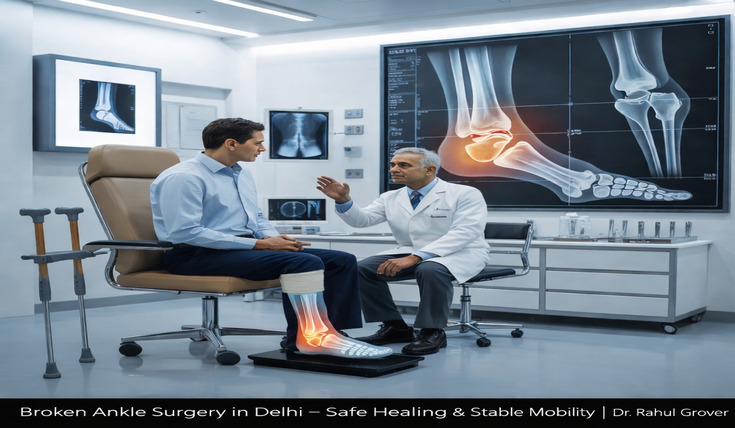
A broken ankle can change daily life in a moment. Walking becomes unstable, standing starts hurting, and normal activities like climbing stairs or getting out of bed feel difficult. Even when swelling looks mild, the ankle joint may still have serious internal damage to bones, ligaments, or cartilage. Because the ankle carries your full body weight, even a small fracture can affect balance and mobility. In complex cases, Broken Ankle Surgery helps restore alignment and protect long-term movement. Under the care of Dr. Rahul Grover, patients in Delhi receive detailed evaluation and a step-by-step recovery plan from the first consultation.
How Ankle Fractures Usually Happen
An ankle fracture commonly occurs due to:
- Slipping on wet or uneven surfaces.
- Falling from stairs.
- Road traffic accidents.
- Sports injuries involving twisting.
- Sudden impact while running or jumping.
In older adults or people with low bone density, even a minor fall may cause a fracture. Because the ankle carries body weight, even minor disruption can make walking painful and unstable.
When Broken Ankle Surgery Becomes Necessary
Not every fracture needs surgery. If the bones stay aligned, a simple fracture can often heal well with a cast. However, Broken Ankle Surgery becomes necessary in the following cases:
- Bones shift out of proper position.
- The joint surface becomes uneven.
- More than one bone is fractured.
- The ankle becomes unstable.
- Ligaments are damaged along with the fracture.
Dr. Rahul Grover uses X-rays and advanced scans (when needed) to determine whether surgery will provide better healing and long-term function than casting alone.
What Happens During Broken Ankle Surgery
During Broken Ankle Surgery, the surgeon realigns the fractured bones and stabilises them using implants such as plates, screws, or rods. These supports provide stability while the ankle heals. The procedure is planned to:
- Restore joint alignment.
- Maintain the ankle’s normal structure.
- Protect surrounding tissue.
- Reduce the risk of stiffness and future arthritis.
Modern surgical techniques allow precise correction, especially in complex or displaced fractures.
Recovery After Surgery
Recovery happens in stages. In the first few weeks, the ankle is protected and weight-bearing is restricted using crutches or a walker. Swelling gradually reduces, and gentle movement begins as advised.
Over time, rehabilitation becomes essential. Physiotherapy after Broken Ankle Surgery supports recovery by:
- Increasing ankle flexibility and range of motion
- Rebuilding strength in the foot and calf
- Improving balance and walking stability
Many patients walk comfortably within a few months, but complete recovery can take longer based on fracture type and general health.
Why Early Treatment Matters
Ignoring an unstable fracture can result in poor bone healing, long-term stiffness, deformity, and chronic pain. Choosing Broken Ankle Surgery at the right time can prevent future disability and support a smoother return to daily life.
Final Thoughts
A broken ankle can be stressful, but recovery is very possible with timely, expert treatment. With correct diagnosis, skilled care, and physiotherapy, broken ankle surgery under Dr. Rahul Grover supports patients in Delhi in returning to walking, working, and living actively again.
Had a great experience with us? We’d love to hear your thoughts! Click here to leave a Google review and share your feedback.