Understanding the MRI report without jumping to conclusions
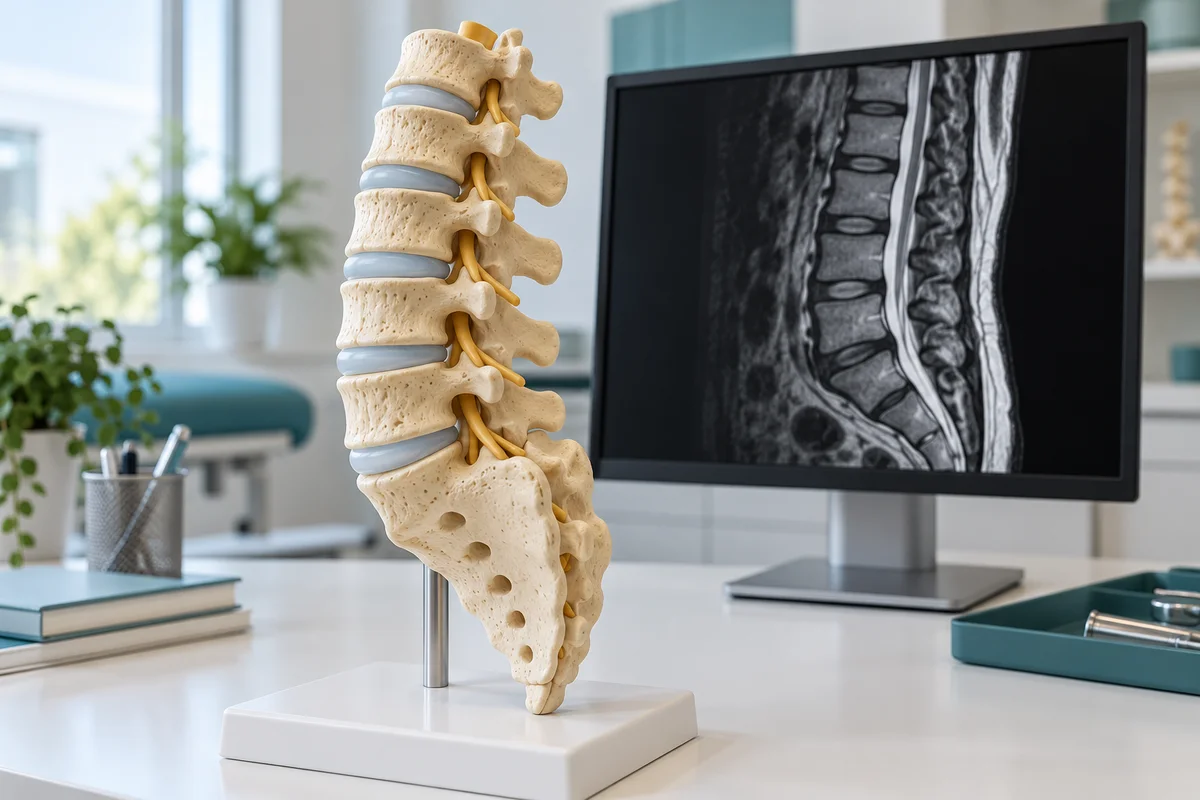
Finding the words Modic changes on a spine MRI report can make chronic back pain feel more worrying. Does it mean the bones are damaged? Is this why your back hurts, and will an operation be necessary? The short answer is that these changes provide useful information, but they are not a diagnosis of the pain source by themselves.
Understanding what the report describes helps you ask better questions and avoid treatment decisions based on one unfamiliar phrase.
What are Modic changes on spine MRI?
Modic changes are differences in the MRI appearance of bone marrow next to the vertebral endplates. Endplates are the interfaces between the spinal bones and the discs that cushion them. These findings commonly occur alongside disc degeneration, particularly in the lower back.
They are not the same as a slipped disc or a trapped nerve. A report may describe several findings together, but each needs to be assessed separately. The number of abnormal-looking features does not automatically indicate how severe your symptoms should be.
What do types 1, 2 and 3 mean?
- Type 1: an oedema-like, inflammatory marrow pattern, associated with increased fluid and fibrovascular tissue near the endplate.
- Type 2: fatty replacement of the marrow adjacent to the endplate.
- Type 3: a pattern associated with sclerosis, or denser bone.
These are descriptions of tissue appearance, not a simple mild-to-severe grading scale. Mixed patterns can occur, and appearances can change over time. Type 1 does not automatically mean infection, while type 3 does not automatically mean a need for surgery.
Do Modic changes explain chronic back pain?
Sometimes they may contribute, but the relationship is not straightforward. Endplate-related pain is a recognised clinical possibility. However, research has produced inconsistent findings about how closely Modic changes correspond to pain intensity and disability. Some people with these findings have little discomfort, while severe pain can occur without them.
A 2022 systematic review and meta-analysis found that lumbar Modic changes were not associated with clinically significant differences in back pain severity or disability. That does not make the finding meaningless for every individual. It means the scan cannot reliably answer the whole question without the history and examination.
What should a clinical assessment include?
Your clinician will ask where the pain is felt, how long it has lasted, what activities worsen it and whether it travels down a leg. Numbness, weakness, walking tolerance and changes in bladder or bowel function are especially important. The examination may assess movement, strength, sensation and reflexes.
Other potential contributors include discs, facet joints, muscle function, hip problems and nerve compression. Sleep, work demands and fear of movement can also influence recovery without making the pain any less real. Bring the MRI images as well as the written report; a phrase in isolation may miss important context.
Does treatment need to target the MRI finding?
Usually, treatment starts with the person's symptoms and functional limitations. Depending on the assessment, this may include education, a graded exercise programme, physiotherapy, activity adjustments and suitable short-term pain relief. Medication choices need to account for other illnesses and possible side effects.
Progress can be measured through walking, sleep, work and everyday movement, rather than whether the MRI looks different. Repeat scanning is not automatically useful when symptoms are stable; it should answer a question that could change management. Our spine treatment and surgery page explains the broader assessment pathway.
Are antibiotics or surgery needed for Modic changes?
Antibiotics should not be started simply because a report mentions Modic changes. In the randomised AIM trial published in The BMJ, three months of amoxicillin did not provide a clinically important benefit for the studied patients with chronic low back pain, Modic changes and a previous disc herniation. Drug-related adverse events were more frequent with antibiotics.
A confirmed spinal infection is a different diagnosis requiring specialist care. Similarly, surgery is not justified by the Modic label alone. A specialist must identify a suitable clinical indication, consider non-operative care and explain realistic benefits and risks. Selected procedures for carefully diagnosed endplate-related pain are not interchangeable with routine back surgery or appropriate for everyone with an MRI finding.
When should back pain be reviewed urgently?
Seek emergency assessment for new difficulty passing urine, loss of bladder or bowel control, numbness around the saddle area, or rapidly worsening leg weakness. Fever with severe back pain, major trauma, or new pain with a cancer history also needs prompt medical assessment. Do not assume these symptoms are explained by an existing MRI report.
For persistent symptoms, book an orthopaedic consultation with Dr Rahul Grover in Delhi and bring your previous scans and treatment details. The goal is a plan based on your symptoms, examination and imaging together, not treatment of a scan label.
Educational sources: ISSLS recommendations on vertebral endplate marrow lesions (2020); Lambrechts and colleagues' systematic review and meta-analysis (2022); the AIM trial (2019); NICE guideline NG59. This article is general information and does not replace individual medical advice.