Shoulder Instability After a First Dislocation: Who Needs Early Bankart Repair?
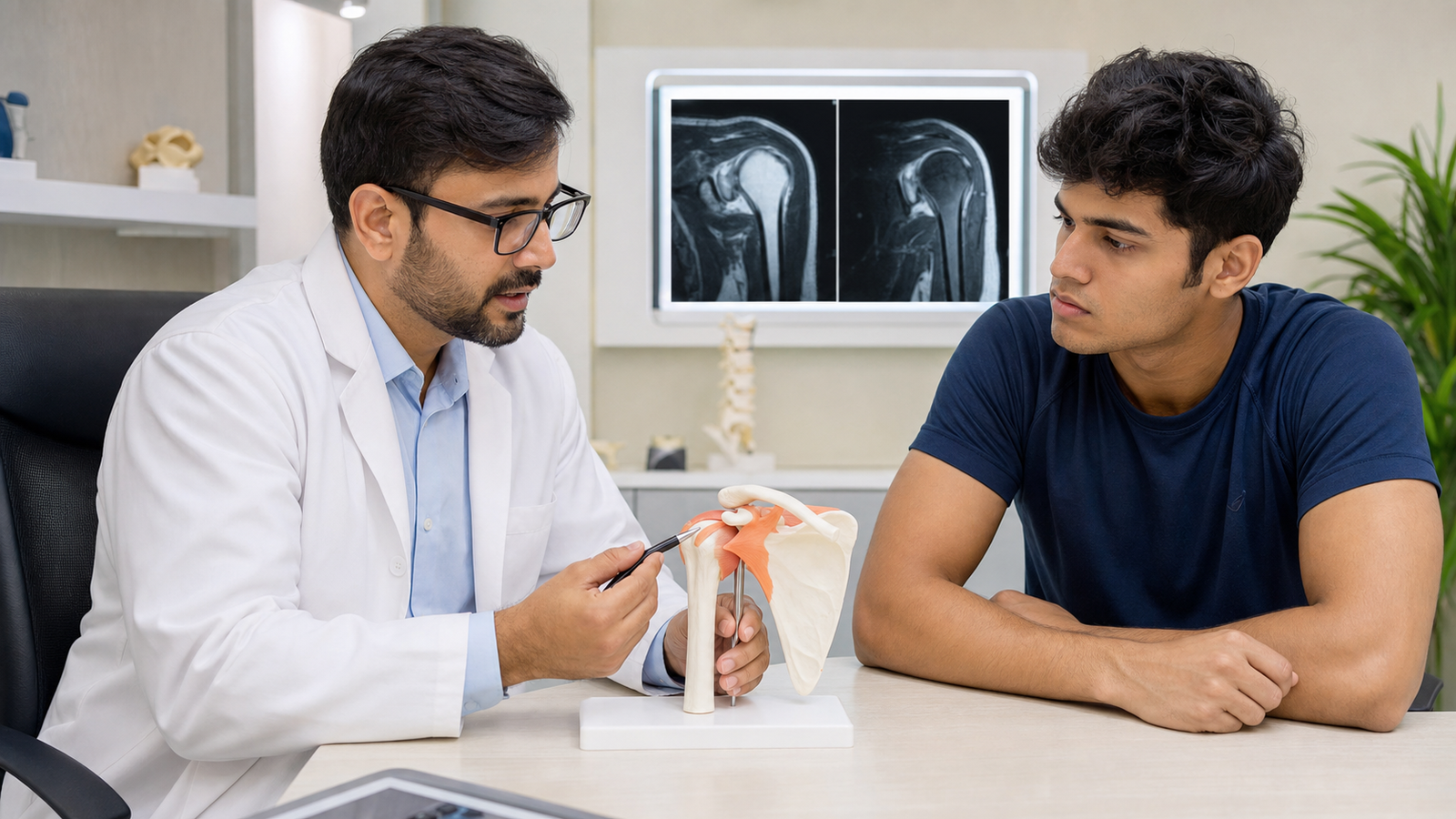
A first shoulder dislocation can feel like a one-time accident, especially if the joint is put back quickly and pain improves. But for some patients, the first dislocation is the start of repeated instability. The shoulder may slip again during sports, gym activity, sleep, overhead work, or even a small fall. This is why the first episode should not be ignored.
The shoulder is the most mobile joint in the body, and that mobility comes with a trade-off. Stability depends on the labrum, ligaments, capsule, muscles, and the shape of the socket. When the shoulder dislocates, the soft tissue rim of the socket can tear. This injury is commonly called a Bankart lesion. In selected patients, early Bankart repair can reduce the chance of repeated dislocation and protect the joint from further damage.
What happens during a first shoulder dislocation?
Most traumatic shoulder dislocations happen when the ball of the upper arm bone comes out of the socket toward the front. This is called anterior shoulder dislocation. It may happen during cricket, football, wrestling, gym training, road accidents, or a fall on an outstretched hand.
After the shoulder is reduced, pain may settle, but the injury inside the joint may remain. The labrum may be torn, the capsule may stretch, and sometimes there can be a small dent in the humeral head called a Hill-Sachs lesion. If the socket edge is also damaged, the risk of repeat instability increases further.
Does every first dislocation need surgery?
No. Many first-time shoulder dislocations are treated without surgery. Initial care usually includes reduction, sling support for a short period, pain control, and a structured physiotherapy program. Rehabilitation focuses on restoring motion, strengthening the rotator cuff, improving shoulder blade control, and reducing the feeling of apprehension.
However, the decision changes when the patient has high-risk features. Young age, contact sports, overhead sports, competitive athletics, repeated slipping sensation, clear Bankart tear on MRI, bony Bankart injury, significant Hill-Sachs lesion, or high-demand work can make recurrence more likely. In such patients, waiting for multiple dislocations may allow more bone and soft tissue damage to develop.
What is Bankart repair?
Bankart repair is a surgery used to restore the torn labrum and capsule to the front of the shoulder socket. It is commonly performed arthroscopically, using small keyhole incisions, a camera, and suture anchors. The aim is to recreate the soft tissue bumper that helps keep the shoulder stable.
Early Bankart repair may be considered when the risk of repeat dislocation is high and imaging confirms a repairable labral injury. The goal is not simply to stop the shoulder from coming out again. It is also to help the patient return safely to sport, work, and daily activity with confidence. You can read more about related treatment options on the shoulder dislocation and Bankart lesion service page.
Who is more likely to need early Bankart repair?
Early surgical stabilization is more often discussed for young athletes, contact-sport players, people who do overhead sports, and patients with a clear structural injury on MRI. It may also be advised if the shoulder feels unstable even after the first episode, or if the patient cannot trust the shoulder during normal movement.
For example, a young kabaddi player, boxer, swimmer, cricketer, or gym athlete with a Bankart lesion may have a very different risk profile compared with an older low-demand patient after a simple fall. The treatment should match the person, not just the X-ray report.
Why repeated dislocations are a concern
Each dislocation can stretch the capsule more and may increase damage to the labrum, socket, or humeral head. Over time, the shoulder may dislocate with less force. Some patients begin avoiding movements because they fear the shoulder will slip. This affects sport, sleep, work, confidence, and long-term shoulder function.
Repeated instability can also make surgery more complex. If there is significant bone loss, a simple Bankart repair may not be enough, and other procedures may be required. Early assessment helps identify whether the shoulder is suitable for repair before more damage occurs.
How Dr Rahul Grover evaluates shoulder instability
Assessment starts with the history of injury: how the shoulder came out, how it was reduced, whether it slipped again, and what activity the patient wants to return to. Examination checks range of motion, strength, apprehension, rotator cuff function, and signs of nerve injury.
X-rays are important after dislocation, and MRI may be advised to assess the labrum, capsule, and associated injuries. In selected cases, CT scan helps measure socket bone loss. This step-by-step evaluation helps decide between physiotherapy, arthroscopic Bankart repair, or other stabilization options.
Recovery after Bankart repair
Recovery is gradual. The shoulder is protected initially, followed by guided movement, strengthening, and sport-specific training. Return to contact sports or heavy gym activity should happen only after strength, control, and confidence have returned. Rushing recovery can increase the risk of failure.
Patients with associated rotator cuff injury, bony defects, or repeated dislocations may need a different timeline. For broader shoulder care information, the article on types of shoulder surgery can also help patients understand available treatment options.
Conclusion
A first shoulder dislocation does not always require surgery, but it should always be evaluated carefully. Young active patients, athletes, and people with Bankart lesions or bone injury may benefit from early stabilization before repeated dislocations cause more damage.
If your shoulder feels loose after a first dislocation, slips during activity, or MRI shows a Bankart lesion, consult an experienced shoulder specialist. Dr Rahul Grover provides diagnosis and treatment for shoulder instability, Bankart lesions, sports injuries, and arthroscopic shoulder repair in Delhi.

About Dr Rahul Grover
Dr. Rahul Grover is a highly respected orthopaedic surgeon known for advanced joint replacement, arthroscopy, spine care, fracture management, and sports orthopaedics.
Know More