Why Some Fractures Heal Slowly: Nonunion, Delayed Union, and When Surgery Helps
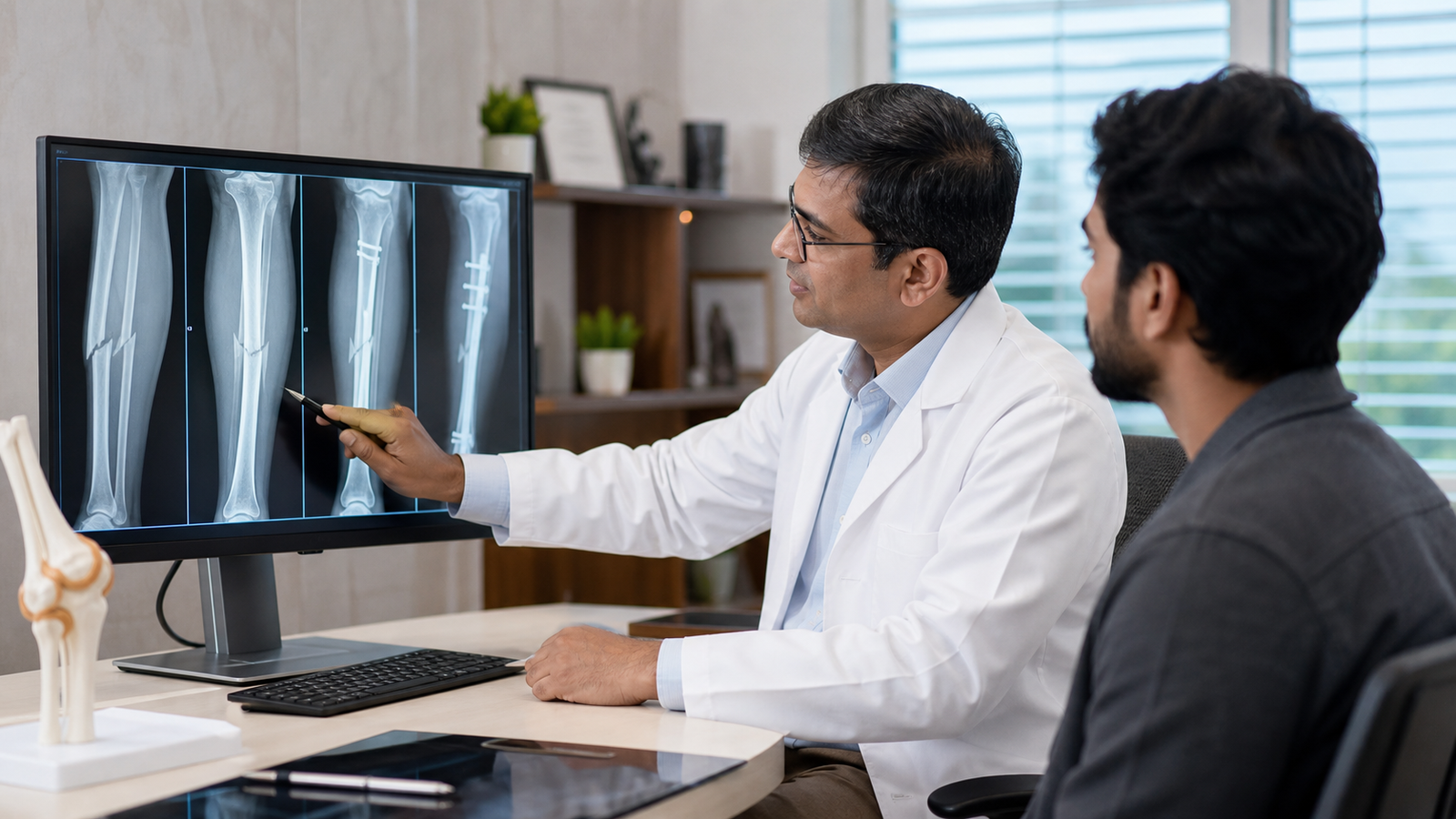
Most broken bones heal in a predictable way. A clot forms, soft callus develops, new bone bridges the fracture, and the bone gradually becomes stronger. But in some patients, healing does not move at the expected speed. The X-ray may show a gap, pain may continue, or the patient may still be unable to put weight on the limb. This is when doctors look for delayed union or nonunion.
Understanding slow fracture healing is important because waiting too long can affect movement, work, sports, and long-term joint function. At the same time, not every slow-healing fracture needs immediate surgery. The right decision depends on the fracture pattern, stability, blood supply, patient health, and how healing looks on follow-up X-rays.
What is delayed union?
Delayed union means the fracture is taking longer than expected to heal, but there are still signs that the body is trying to repair the bone. The expected healing time varies by bone, age, injury severity, and treatment method. A small wrist fracture may heal much faster than a severe tibia or femur fracture. In delayed union, the doctor may see some callus formation on X-ray, but the fracture line remains visible and pain may persist.
This stage needs careful monitoring. Sometimes a change in activity, better immobilization, nutritional correction, vitamin D assessment, or protected weight-bearing is enough. In other cases, delayed union is an early warning that the fracture is not stable enough and may progress to nonunion.
What is nonunion?
Nonunion means the broken bone has stopped healing and is unlikely to unite without further treatment. A nonunion may be painful, unstable, or associated with swelling and difficulty using the limb. Some patients notice movement at the fracture site, while others mainly feel deep pain during walking, lifting, or weight-bearing.
Nonunion is not one single problem. Some nonunions have good blood supply but poor stability. Others have poor biology, infection, bone loss, or damaged soft tissues. This is why treatment must be planned after a detailed clinical examination, X-rays, and sometimes CT scans or blood tests.
Why do some fractures heal slowly?
Bone healing depends on two major factors: stability and biology. Stability means the broken ends are held in the right position with enough support. Biology means the fracture has blood supply, healthy soft tissue, and the nutrients needed for repair.
Common reasons for slow fracture healing include severe injury, open fractures, poor alignment, inadequate immobilization, early overloading, smoking, diabetes, low vitamin D, infection, poor nutrition, certain medicines, and reduced blood supply to the bone. Fractures around joints and long-bone fractures may need closer follow-up because even small alignment problems can affect function.
If the original injury involved major soft tissue damage or bone loss, healing may take longer even with correct treatment. This is why early assessment by an orthopaedic fracture specialist matters. You can also read more about treatment planning on the fracture surgery service page.
Warning signs that need review
A fracture should be reviewed if pain is not reducing over time, swelling keeps returning, the limb feels unstable, walking remains difficult, or the X-ray shows little progress between visits. New fever, wound discharge, redness, or increasing pain may suggest infection and needs urgent attention.
Patients should also avoid comparing their recovery with someone else. Two people with the same bone fracture may heal differently because their injury pattern, blood supply, age, bone quality, and activity demands are different. A safe recovery plan is always individual.
When can surgery help?
Surgery may help when the fracture is not stable, the bone ends are poorly aligned, there is a gap, the implant has failed, or the biology of healing needs support. The goal is not just to "join the bone"; it is to restore alignment, provide stable fixation, improve the healing environment, and help the patient regain function.
Depending on the case, surgery may include plate and screw fixation, intramedullary nail fixation, revision fixation, bone grafting, bone substitute, infection clearance, or correction of deformity. Bone grafting is often used when the fracture needs biological support. In some nonunion cases, both stability and biology must be corrected together for good results.
How diagnosis is made
The evaluation usually begins with a physical examination and X-rays. The doctor checks pain location, movement, tenderness, limb alignment, wound condition, and function. A CT scan may be advised when X-rays do not clearly show whether bridging bone has formed. Blood tests may be needed if infection, vitamin deficiency, or metabolic factors are suspected.
Dr Rahul Grover focuses on identifying the reason behind slow healing before recommending treatment. This helps avoid repeated procedures and supports a more predictable recovery. For patients with bone strength concerns, the article on bone healing phases may also be useful.
Can slow healing be prevented?
Not every delayed union can be prevented, but risk can be reduced. Follow immobilization instructions, avoid smoking, maintain protein intake, correct vitamin D deficiency if present, attend follow-ups, and do not start full weight-bearing before the fracture is ready. If you have diabetes or another medical condition, keeping it controlled helps healing.
Patients should not ignore persistent pain after a fracture. Early review can identify whether healing is simply slow or whether treatment needs to change. If surgery is needed, timely planning can reduce disability and help protect nearby joints.
Conclusion
Delayed union and nonunion are important causes of prolonged pain after a fracture. The good news is that many slow-healing fractures can be managed well when the cause is identified correctly. Some need observation and protection; others need surgery to restore stability and stimulate bone healing.
If your fracture pain is not improving, your X-ray is not showing progress, or you are worried about delayed healing, consult an experienced orthopaedic surgeon. Dr Rahul Grover provides assessment and treatment for complex fractures, delayed union, nonunion, and fracture fixation problems in Delhi.

About Dr Rahul Grover
Dr. Rahul Grover is a highly respected orthopaedic surgeon known for advanced joint replacement, arthroscopy, spine care, fracture management, and sports orthopaedics.
Know More