Minimally Invasive Knee Care
Advanced Knee Arthroscopy Treatment in Delhi NCR
Keyhole treatment for knee injuries
Meniscus, cartilage and ligament care
Faster return-to-activity planning

ACL Reconstruction Recovery Story
Knee Treatment Recovery Story
Early Knee Care
Non-Surgical Knee Care
For mild knee pain, early injury, or stable symptoms, care may include rest, medicines, bracing, injections, physiotherapy, strengthening, and activity modification.
Physiotherapy and strengthening
Bracing and medicines
PRP, GFC, BMAC or ACP in selected cases

Your Knee Arthroscopy Specialist
Meet Dr Rahul Grover
Dr Rahul Grover is an experienced orthopaedic and sports injury surgeon in Delhi with expertise in knee arthroscopy, ligament injuries, meniscus repair, cartilage care, joint replacement, and fracture management.
His approach focuses on accurate diagnosis, minimally invasive treatment when needed, and structured rehabilitation to help patients return to routine and sports activity safely.
Need knee MRI advice?
Share your MRI report for an expert opinion on knee pain, locking, swelling, or meniscus injury.
Send MRI Report
Understand Treatment
What is Knee Arthroscopy?
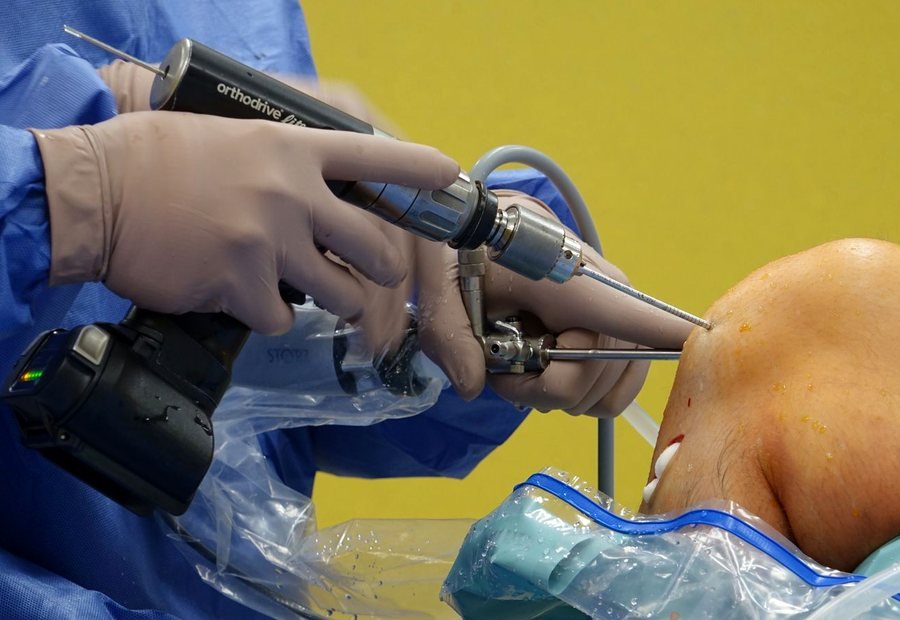
Knee arthroscopy is a minimally invasive keyhole procedure used to diagnose and treat problems inside the knee joint. A small camera helps the surgeon inspect the joint and treat the damaged area with specialized instruments.
It is commonly used for meniscus tears, knee locking, ligament injuries, cartilage damage, loose bodies, persistent swelling, and sports-related knee problems.
Camera-assisted view inside the knee
Useful for meniscus, cartilage and ligament problems
Planned around activity and recovery goals
Watch: 4 Types Knee Injury
Understand common knee injuries and when evaluation is needed.
When To Consult
Signs You May Need Knee Arthroscopy Evaluation
Persistent knee symptoms after injury or repeated swelling should be evaluated early, especially if daily activity or sports are affected.
Knee locking or catching
Locking may happen when a meniscus tear or loose fragment blocks smooth movement.
Repeated swelling
Swelling after walking, sports, or twisting injury can suggest internal knee damage.
Pain while walking or stairs
Pain with stairs, squatting, pivoting, or walking may need MRI-based evaluation.
Twisting sports injury
Sudden twisting can injure meniscus, cartilage, ACL, or other knee structures.
Unable to return to sport
Persistent instability, pain, or swelling can delay safe sports return.
Symptoms despite physiotherapy
If conservative care fails, arthroscopy may be considered after examination.
Watch: Knee Locking Due to Meniscus Tear
Learn why locking and catching can happen inside the knee joint.
Treatment Decision
When is Knee Arthroscopy Recommended?
Not every knee injury needs surgery. Knee arthroscopy may be recommended when symptoms persist despite conservative care, MRI shows a repairable meniscus tear, the knee locks, or there is treatable cartilage or ligament-related damage.
The decision depends on age, injury type, MRI findings, pain level, swelling, activity goals, and whether the knee problem is affecting daily life or sports.
Knee locking, catching, or painful clicking continues
MRI shows meniscus, cartilage, or loose body problem
Return to sports or active work is affected
Watch: Arthroscopic Meniscus Repair
See how meniscus repair may be performed through keyhole technique.
Surgical Technique
Arthroscopic Meniscus & Knee Repair
During knee arthroscopy, small keyhole incisions allow the surgeon to inspect the joint, identify the damaged structure, and treat the problem precisely.
Depending on the condition, treatment may include meniscus repair, meniscus balancing, cartilage treatment, loose body removal, or planning for ligament reconstruction.
Small incision keyhole approach
Camera-guided view inside the knee
Treatment directed at the exact injured structure
Advanced Meniscus Care
Meniscus Root Tear & Repair
Meniscus root tears can affect knee load distribution and may need timely diagnosis and repair planning to protect long-term knee function.
Preserving Knee Health With Meniscus Repair
Some meniscus tears should be repaired rather than ignored. The right decision depends on tear type, MRI findings, age, symptoms, cartilage condition, and activity goals.
- Helps identify serious meniscus tear patterns
- Supports joint-preserving treatment planning
- Useful for pain, locking, and swelling symptoms
Compare Your Options
See the Difference for Yourself
Knee arthroscopy is designed to diagnose and treat internal knee damage with a minimally invasive keyhole approach.
| Factor | Knee Arthroscopy | Open / Delayed Care |
|---|---|---|
| Incision size | Smaller keyhole incisions | Larger exposure may be needed |
| Diagnosis | Camera-assisted view inside the knee | Symptoms may remain unclear |
| Treatment focus | Targets exact meniscus, cartilage, or loose body issue | Problem may progress if untreated |
| Recovery plan | Structured rehab and mobility plan | Recovery depends on injury progression |
Expert Knee Care
Start Your Knee Recovery Journey
Send your MRI report for a free opinion on knee pain, locking, swelling, meniscus tear, or sports injury.
Recovery Support
Rehabilitation After Knee Arthroscopy
Rehab is an important part of knee arthroscopy recovery. A structured plan helps reduce swelling, restore knee motion, rebuild strength, and improve confidence during walking, stairs, work, and sports.
Dr Rahul Grover guides recovery according to the exact procedure, tissue healing, pain level, and functional progress.
Motion
Gradual knee bending and straightening exercises.
Strength
Muscle strengthening to support knee mechanics.
Balance
Balance and control training for safer movement.
Activity
Gradual return to work, walking, gym, and sports.
Why Choose Us
Why Choose Dr Rahul Grover for Knee Arthroscopy?
Experienced orthopaedic and sports injury surgeon
Expertise in knee arthroscopy and meniscus repair
MRI-based treatment planning
Focus on safe return to activity
Personalized rehabilitation guidance
Care for athletes and active patients
Patient Questions
Knee Arthroscopy FAQs
Is knee arthroscopy always needed for a meniscus tear?
No. Treatment depends on tear type, symptoms, age, activity level, locking, swelling, and MRI findings.
When should I consult for knee locking?
Locking, catching, or inability to fully move the knee should be evaluated because it may indicate a meniscus tear or loose fragment.
How long does recovery take after knee arthroscopy?
Recovery varies by procedure. Simple procedures may recover faster, while meniscus repair and ligament-related procedures need more structured rehabilitation.
Can arthroscopy help athletes return to sports?
Yes, when the condition is suitable. Treatment and rehab are planned around safe return to activity and sport-specific strength.
Should I send my MRI before consultation?
Sharing your MRI can help the doctor understand the injury pattern and guide whether conservative care or arthroscopy should be discussed.
Watch: Meniscus Root Tear Signs
Learn the signs and symptoms that should not be ignored.
Expert Knee Care
Book Appointment
Need help with knee pain, locking, or injury?
Book a consultation with Dr Rahul Grover for diagnosis and a suitable knee arthroscopy or recovery plan.