
Broken Wrist Surgery in Delhi
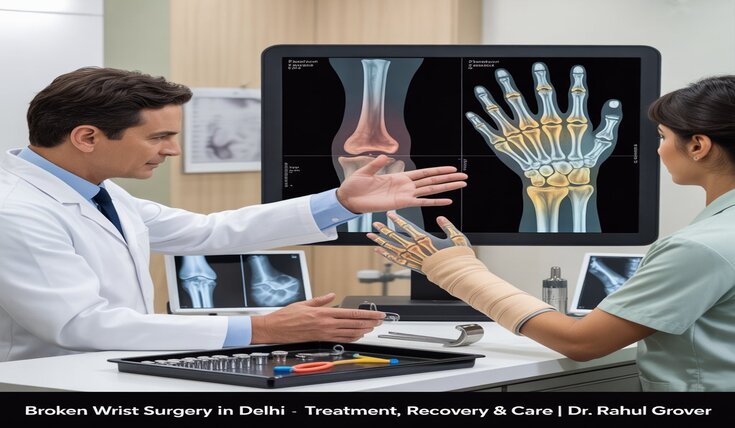
A broken wrist can quickly affect daily life—using your phone, writing, or even dressing can become painful. The discomfort and weakness may limit independence. Most cases heal with a cast, but when the fracture doesn’t stay aligned, broken wrist surgery is often the safest option to stabilise the joint. Dr. Rahul Grover supports patients through every step with clarity and care.
What Causes a Broken Wrist?
Wrist fractures often happen when a person falls and lands on the hand, sending force straight to the wrist. Other causes include:
- Road traffic accidents
- Sports trauma (cricket, football, cycling, skating)
- Slips and falls at home/work
- Heavy lifting or workplace injuries
In older adults, weak bones due to low bone density make fractures more likely—even after small falls. In children and young adults, high-impact falls may cause more complicated breaks, which may need broken wrist surgery for better alignment and healing.
When Does a Wrist Fracture Need Surgery?
Not every fracture needs an operation, and doctors always look for non-surgical options first. Dr. Rahul Grover checks X-rays and scans to see how the bones have broken and whether the wrist joint remains stable.
A patient may need broken wrist surgery when:
- The bones shift out of place
- The fracture affects the joint area
- The bone breaks into multiple pieces
- The wrist remains unstable even after casting
Dr. Rahul Grover explains everything clearly, in simple language, so patients understand why surgery may give better long-term results than plaster casting.
How Broken Wrist Surgery Is Done
During broken wrist surgery, the surgeon places the broken bones back into correct alignment. After this, the surgeon fixes the bones using metal plates, screws, or pins so they stay stable while healing.
Modern techniques help reduce tissue damage and improve precision. Dr. Rahul Grover tailors surgery based on:
- The fracture pattern.
- Age and bone condition.
- Lifestyle and activity demands.
- Dominant vs non-dominant hand involvement.
This structured planning improves comfort and recovery outcomes.
Recovery After Broken Wrist Surgery
Wrist surgery starts the healing process, but recovery depends heavily on rehabilitation. Physiotherapy helps bring back function, and a splint is often used early on as swelling comes down.
Gentle finger movement is encouraged early to reduce stiffness and improve comfort.
As healing continues:
- physiotherapy improves wrist motion.
- grip exercises rebuild strength.
- daily tasks return step-by-step.
Many patients regain functional wrist use within a few months, though full strength may take longer. If you follow the rehabilitation plan properly after broken wrist surgery, you improve your chances of a smoother recovery.
Why Early Treatment Matters
If a wrist fracture feels unstable and a person delays treatment, the bone may heal in the wrong shape. That can lead to long-term problems like deformity, stiffness, or even arthritis in the future.
Early evaluation helps the joint heal correctly. Choosing broken wrist surgery at the right time often prevents long-term pain and protects hand function.
Final Thoughts
A broken wrist can affect routine life, but early treatment can reduce future complications. With Dr. Rahul Grover in Delhi, broken wrist surgery helps patients heal well and regain comfort.
Had a great experience with us? We’d love to hear your thoughts! Click here to leave a Google review and share your feedback.