Broken Hand Recovery Time: A Complete Guide
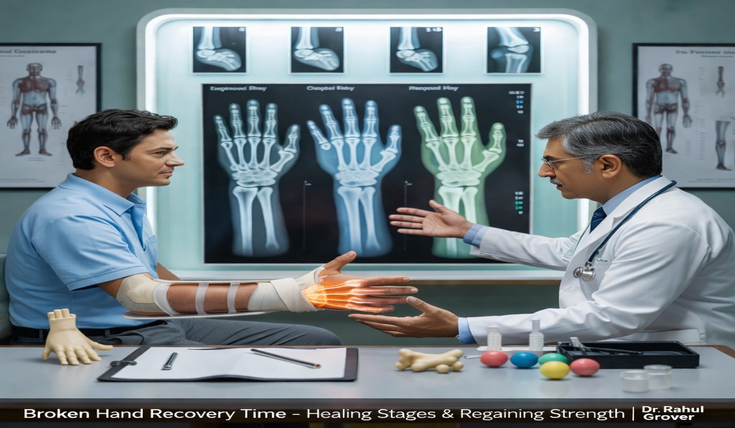
Fracture in hand can disturb daily life to a large extent. Regular activities like texting, working on a computer, or fastening buttons may become difficult or slow. This can lead to worry and frustration. Because of this, one of the first concerns patients have is the timeline for recovery.
Understanding Broken Hand Recovery Time helps patients stay calm, patient, and prepared during healing. Under the guidance of Dr. Rahul Grover, recovery focuses on safe healing, gentle movement, and long-term hand strength.
What Does Broken Hand Recovery Time Mean
Broken Hand Recovery Time means the complete healing journey of your hand after it breaks. It includes the bone mending, the swelling settling, the fingers moving more freely, and strength slowly returning. Recovery is a step-by-step process, and every phase plays an important role.
Some people heal faster, while others take longer. This difference is normal.
What Affects Recovery Time
Several factors influence Broken Hand Recovery Time, including:
- Which bone in the hand is broken.
- Whether the fracture is simple or complex.
- Age and bone health.
- Swelling and soft tissue injury.
- Whether surgery was needed.
- How well instructions are followed.
Dr. Rahul Grover explains that even a small fracture can take time if the hand is not rested properly.
Early Healing Phase
The first few weeks focus on protection. At this point, doctors usually place the hand in a cast, splint, or brace to prevent movement. As days pass, swelling and pain slowly reduce, showing that healing is progressing.
During early Broken Hand Recovery Time:
- Movement stays limited
- Swelling gradually settles
- Pain improves with rest
- Fingers may move gently
This phase is important because rushing it can delay healing.
Middle Recovery Phase
Once X-rays show progress, movement increases slowly. This stage of Broken Hand Recovery Time focuses on flexibility and control.
At this point:
- Stiffness becomes noticeable.
- Gentle exercises begin.
- Grip strength feels weak.
- Daily tasks feel tiring.
Dr. Rahul Grover often reassures patients that weakness is normal and improves with time.
Later Recovery Phase
At the end of Broken Hand Recovery Time, the goal is to restore strength and self-confidence with a gradual move back to usual routines.
This phase includes:
- Strengthening exercises.
- Improved coordination.
- Better grip control.
- Reduced discomfort.
Complete strength often returns slowly over months, more so with serious fractures.
How Physiotherapy Helps
Physiotherapy reduces Broken Hand Recovery Time by:
- Keeping joints flexible.
- Helping fingers move better.
- Strengthening the hand grip.
- Reducing long-term pain.
Skipping exercises often slows recovery.
Simple Tips to Heal Faster
Patients can make Broken Hand Recovery Time smoother by:
- Keeping the hand raised whenever possible to reduce swelling.
- Staying away from heavy lifting in the early healing stage.
- Follow prescribed movement and stretching exercises consistently.
- Include calcium-rich foods like milk, yogurt, and leafy greens in meals.
- Visit the doctor for scheduled check-ups to ensure proper healing.
Final Thoughts
Broken Hand Recovery Time is different for everyone, but patience really helps. Under the guidance of Dr. Rahul Grover, patients usually regain good hand function. Recovery may seem slow, but daily progress helps bring back strong and confident movement.
Had a great experience with us We’d love to hear your thoughts! Click here to leave a Google review and share your feedback.

About Dr Rahul Grover
Dr. Rahul Grover is a highly respected orthopaedic surgeon known for advanced joint replacement, arthroscopy, spine care, fracture management, and sports orthopaedics.
Know More