Frozen Shoulder in Diabetes: Why Early Treatment Prevents Long-Term Stiffness
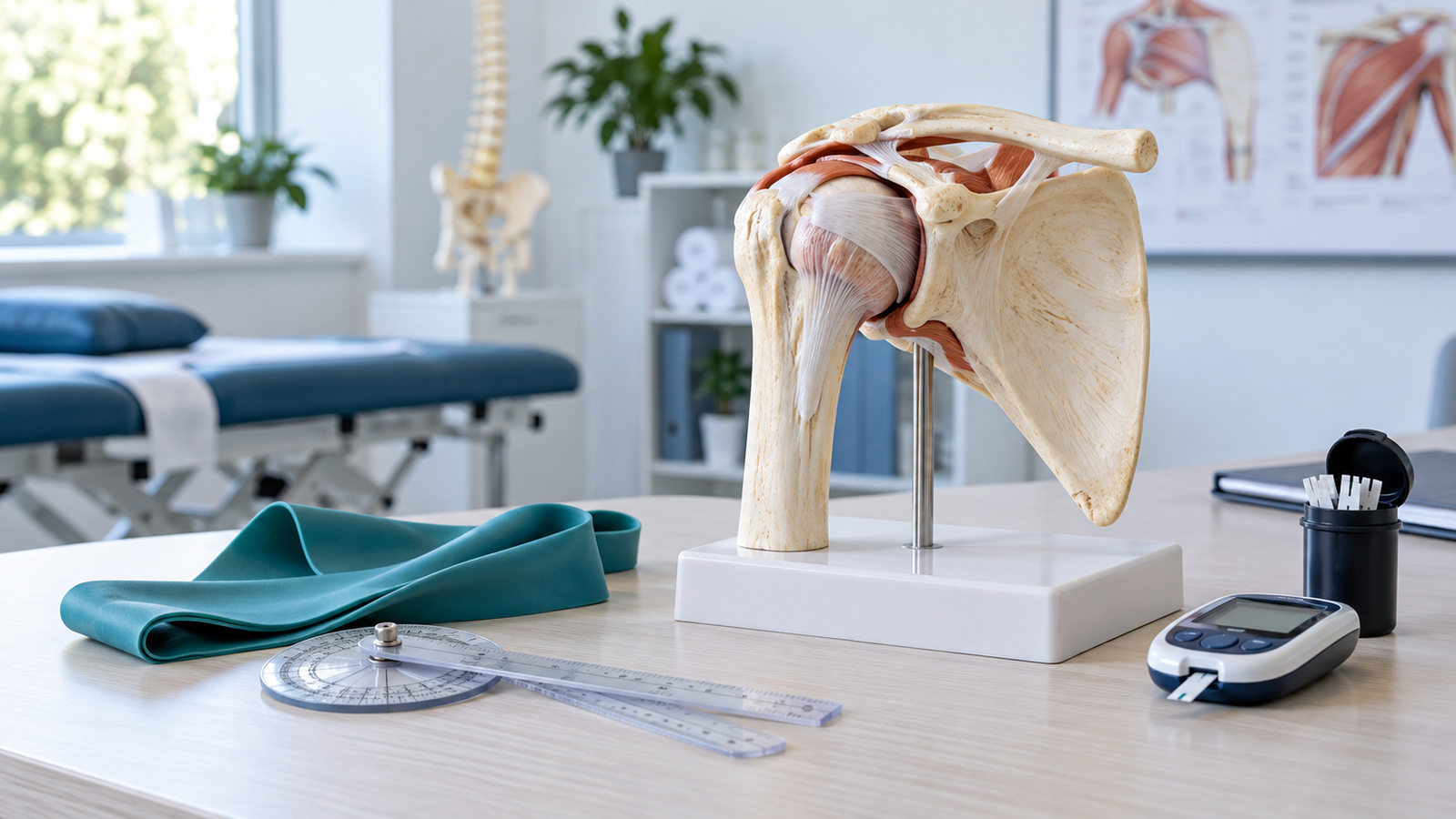
Shoulder pain in a person with diabetes is easy to dismiss as muscle strain, sleeping awkwardly, or overuse. But when reaching overhead, fastening clothes, or placing a hand behind the back becomes progressively difficult, the problem may be frozen shoulder. Also called adhesive capsulitis, frozen shoulder causes pain and a marked loss of movement as the shoulder capsule becomes thick and tight.
Diabetes is a well-recognised risk factor. Frozen shoulder can also be more persistent in people with diabetes, so waiting until the joint is severely stiff may make recovery slower. Early treatment cannot guarantee a short illness, but it can control pain, preserve usable movement, guide safe stretching, and reduce avoidable loss of function.
What happens inside a frozen shoulder?
The shoulder is a ball-and-socket joint surrounded by a flexible capsule. In frozen shoulder, this capsule becomes inflamed, thickened, and contracted. Adhesions can develop and the normal space inside the joint reduces. As a result, the arm becomes difficult to move both actively and when someone else tries to move it.
This restriction of both active and passive movement is an important clue. A patient with a rotator cuff tear may struggle to lift the arm because of pain or weakness, yet passive movement can remain relatively better. In frozen shoulder, the examiner also finds a firm restriction when gently moving the relaxed arm, often with external rotation particularly limited.
Why diabetes increases frozen shoulder risk
Both type 1 and type 2 diabetes are associated with a higher risk of frozen shoulder. The exact biological pathway is not fully settled, but prolonged exposure of tissues to elevated glucose may affect collagen and connective tissue, making the capsule stiffer and less elastic. Inflammation and other metabolic factors may also contribute.
Research estimates vary, but systematic reviews consistently find frozen shoulder more often among people with diabetes than in the general population. Diabetes may also be associated with more persistent pain, reduced movement, or a slower response in some patients. These findings do not mean every diabetic patient will develop frozen shoulder, and they do not make shoulder pain automatically adhesive capsulitis.
Early symptoms that should not be ignored
Frozen shoulder often begins gradually. The first sign may be a dull ache over the outer shoulder or upper arm. Pain can become worse at night, disturb sleep, and increase with sudden reaching. Everyday movements start to shrink: reaching a high shelf, putting on a shirt, fastening a bra, combing hair, or reaching for a back pocket.
At first, a person may avoid these movements because they hurt. Over time, genuine capsular stiffness develops and the arm no longer reaches the same positions even with assistance. In a person with diabetes, progressive pain plus measurable loss of movement should prompt assessment rather than months of self-treatment.
The three stages of frozen shoulder
The freezing stage is usually dominated by increasing pain and gradual loss of movement. Night pain can be prominent, and stretching too aggressively may irritate the shoulder. The frozen stage often brings less intense pain but greater stiffness, making dressing, grooming, driving, and work difficult.
During the thawing stage, movement slowly returns. The full course may last many months and sometimes considerably longer. These stages can overlap, and every patient does not follow the same timetable. Treatment is adjusted to the current balance of pain, stiffness, function, and response to therapy.
Why early treatment matters
Early assessment confirms whether the shoulder is truly freezing and rules out other causes such as rotator cuff injury, arthritis, calcific tendinitis, neck-related pain, or a previous unnoticed injury. This prevents a painful shoulder from being treated with the wrong exercise programme.
Timely pain control can make sleep and gentle movement easier. A stage-appropriate mobility programme can preserve available range without repeatedly provoking inflammation. Early review also creates an opportunity to check diabetes control with the patient's physician or endocrinologist and address any other health factors affecting recovery.
“Early treatment” does not mean forcing the shoulder through severe pain. Intense stretching during a highly painful phase can worsen symptoms. The right dose of movement is guided by irritability: gentle and frequent when pain is high, then progressively stronger mobility and strengthening work as the shoulder settles.
How frozen shoulder is diagnosed
Diagnosis starts with the history, including the onset of pain, night symptoms, diabetes duration and treatment, thyroid problems, previous shoulder injury or surgery, and daily functional limits. The examiner compares both shoulders and measures active and passive range of motion.
X-rays may be advised to rule out arthritis or another bone-related cause of stiffness. Ultrasound or MRI is not always required to diagnose frozen shoulder, but imaging can help when a rotator cuff tear, other soft-tissue injury, or an alternative diagnosis is suspected. The rotator cuff tear service page explains how tendon pain and weakness are assessed differently.
Treatment options for frozen shoulder in diabetes
Most patients begin with non-surgical treatment. This may include suitable pain relief, heat or cold for comfort, guided physiotherapy, and a home movement programme. The aim is to control pain while gradually restoring movement and strength. Exercises should be demonstrated correctly and reviewed as the stage changes.
A corticosteroid injection into the shoulder joint may reduce pain and improve movement, particularly earlier in the condition. In people with diabetes, steroid injections can temporarily raise blood glucose, so the orthopaedic plan should be coordinated with the clinician managing diabetes. Medication or insulin should never be adjusted without that clinician's advice.
Hydrodilatation may be considered when symptoms remain limiting. Fluid is introduced into the joint under image guidance to stretch the tight capsule. The expected benefit, timing, and follow-up physiotherapy should be discussed for the individual patient.
When is surgery considered?
Surgery is uncommon because many frozen shoulders improve with time and appropriate non-surgical care. When severe stiffness persists despite a structured treatment programme, manipulation under anaesthesia or arthroscopic capsular release may be discussed. These procedures aim to release the contracted capsule and restore movement.
Post-procedure physiotherapy is essential to maintain the movement gained. People with diabetes may retain some stiffness or recover more slowly, so expectations and glucose management need careful planning. Surgery is selected because symptoms and function justify it, not simply because an MRI shows capsular changes.
Diabetes control is part of shoulder care
Orthopaedic treatment works alongside, not in place of, diabetes management. Patients should continue regular follow-up, take prescribed medicines, and discuss persistently high or fluctuating readings with their physician. Better overall glucose management supports general health, wound healing, and treatment planning, although it cannot guarantee that frozen shoulder will not occur.
People with diabetes should also report stiffness in the opposite shoulder and limitations in the hands. Diabetes can be associated with other connective-tissue and joint problems, and recognising the full pattern helps coordinate care.
Returning to work, exercise, and daily activity
Complete rest is rarely the goal. Patients are usually encouraged to use the arm within comfortable limits while avoiding repeated forceful movements that create prolonged pain. Desk setup, sleeping position, clothing choices, and temporary changes to overhead work can reduce daily irritation.
Strengthening is introduced as movement and pain permit. Gym users should rebuild pulling, pressing, and overhead activity gradually rather than testing the shoulder with heavy loads. The related article on shoulder pain while lifting weights explains how cuff, labral, and impingement symptoms may differ from capsular stiffness.
How Dr Rahul Grover plans treatment
Dr Rahul Grover evaluates frozen shoulder by confirming the movement pattern, stage, pain severity, functional loss, and possible competing diagnoses. For patients with diabetes, the plan also considers glucose control, other medical conditions, medication safety, and the effect of treatment on daily life.
Treatment may combine pain control, tailored physiotherapy, injection or hydrodilatation when appropriate, and close review of progress. Resistant cases are assessed for surgical release only after the likely benefits and recovery demands are clear. Patients can explore Dr Rahul Grover's broader orthopaedic services in Delhi or arrange a focused shoulder evaluation.
Conclusion
Frozen shoulder is more common in people with diabetes and may produce longer-lasting stiffness. Early pain, night discomfort, and progressive difficulty reaching overhead or behind the back should not be ignored, especially when both active and passive movement are becoming restricted.
Early assessment and stage-appropriate treatment can protect function and guide recovery without aggressive, painful exercise. Coordinated orthopaedic, physiotherapy, and diabetes care gives each patient a clearer path through what can otherwise become a long and frustrating condition.

About Dr Rahul Grover
Dr. Rahul Grover is a highly respected orthopaedic surgeon known for advanced joint replacement, arthroscopy, spine care, fracture management, and sports orthopaedics.
Know More