Hip Pain in Young Adults: When It Is Not Arthritis and Needs Specialist Review
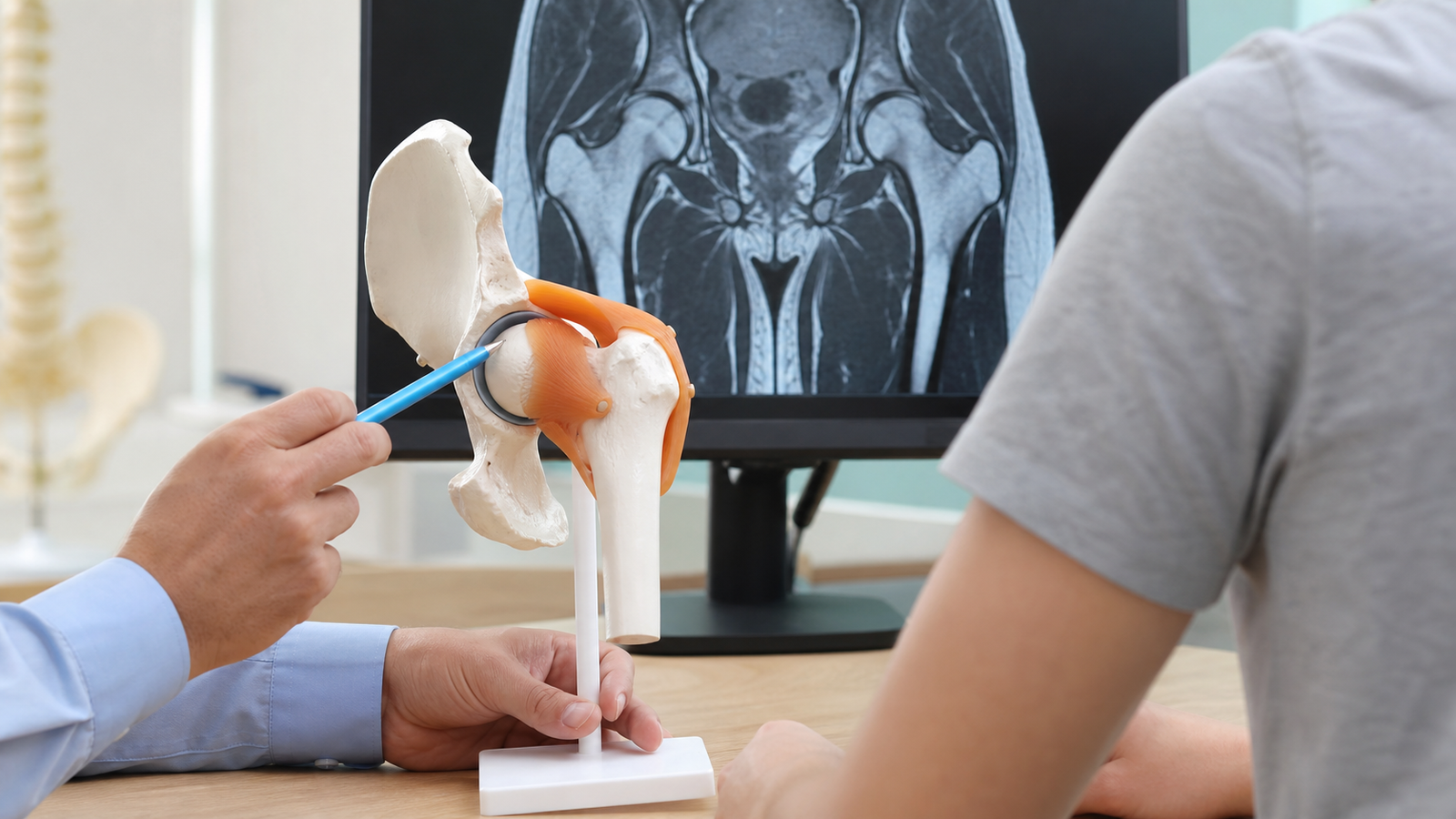
Hip pain in young adults is often dismissed as muscle strain, overuse, or early arthritis. In reality, many painful hip problems in active adults have nothing to do with typical age-related arthritis. Pain may come from hip impingement, labral injury, early avascular necrosis, stress injury, tendon problems, or referred pain from the lower back.
The challenge is that young adults often continue working out, playing sports, or walking through pain because they expect it to settle. Some hip conditions do improve with rest and physiotherapy, but others need early diagnosis to prevent cartilage damage, repeated flare-ups, or long-term stiffness. A specialist review helps separate a simple strain from a structural hip problem.
Where young-adult hip pain is usually felt
The location of pain gives useful clues. Deep groin pain often suggests a problem inside the hip joint, such as femoroacetabular impingement or a labral tear. Pain on the outside of the hip may come from tendons, bursitis, or muscle imbalance. Buttock pain can come from the hip, sacroiliac joint, or spine. Pain that travels with numbness or tingling may need a spine assessment too.
Young adults should pay attention to pain that appears during squatting, sitting cross-legged, running, pivoting, or getting in and out of a car. Clicking, catching, locking, or a sharp pinch in the groin should not be ignored if it keeps returning.
Femoroacetabular impingement can mimic a strain
Femoroacetabular impingement, often called FAI, happens when the ball and socket of the hip do not move smoothly because of extra bone shape around the joint. This can create friction during bending, twisting, squatting, or sport. Over time, it may irritate the labrum and cartilage.
FAI is common in young active patients because pain is often triggered by gym exercises, football, cricket, running, dance, martial arts, or long sitting. It may feel like a recurring groin pull, but the pain keeps returning with specific hip positions. Early diagnosis matters because movement modification and targeted rehabilitation may help, while some patients need further imaging and specialist care.
Labral tears need more than painkillers
The labrum is a ring of cartilage around the hip socket. It helps deepen the socket and supports smooth movement. A labral tear can cause deep groin pain, clicking, catching, or a feeling that the hip is not moving freely. Labral injuries may happen after trauma, sports rotation, hip impingement, or structural hip problems.
Painkillers can reduce symptoms for a short time, but they do not repair a structural tear. The treatment plan depends on symptoms, activity level, MRI findings, hip shape, and cartilage condition. Some patients improve with physiotherapy, while others may need arthroscopic evaluation. For broader hip treatment options, see the hip replacement and hip care service page.
AVN is an important cause to rule out
Avascular necrosis, also called AVN or osteonecrosis, happens when blood supply to the femoral head is reduced. It can affect younger adults and may begin as deep groin or hip pain before major X-ray changes are visible. Risk factors may include steroid use, alcohol overuse, previous injury, certain medical conditions, or sometimes no clear cause.
AVN is important because early stages may be managed differently from late collapse. If hip pain is persistent, worsening, or present at rest, specialist review and MRI may be needed. Waiting too long can allow the bone surface to collapse and may lead to arthritis-like changes.
Sports injuries and overuse patterns
Young adults with hip pain often have a training story: a sudden sprint, awkward twist, heavy squats, new running mileage, or return to sport after a break. Muscle strains are common, but recurring pain may point to an underlying joint or tendon issue. If pain returns every time activity increases, the problem needs a proper movement and strength assessment.
Hip pain can also be part of a larger chain involving the knee, pelvis, and lower back. Weak gluteal muscles, poor landing control, reduced hip mobility, and training errors can overload the joint. Patients involved in sport may also benefit from reading about sports injury care and guided recovery.
When should you see a hip specialist?
Seek specialist review if hip pain lasts more than two to three weeks, keeps returning with activity, causes limping, wakes you at night, limits sport, or is associated with clicking, catching, locking, or reduced range of motion. Sudden severe pain after injury, inability to bear weight, fever, or unexplained weight loss needs urgent medical attention.
Evaluation usually includes clinical examination, X-rays, and sometimes MRI. The doctor checks hip movement, impingement signs, muscle strength, gait, spine contribution, and activity demands. This helps identify whether pain is from the hip joint, soft tissue, bone, or referred from another area.
How treatment is planned
Treatment may include activity modification, anti-inflammatory medicines when appropriate, physiotherapy, hip mobility work, strengthening, injection in selected cases, or surgery for structural problems. The right plan depends on diagnosis. A young adult with a labral tear and impingement needs different advice from someone with tendon overload or early AVN.
Dr Rahul Grover focuses on finding the cause of hip pain before recommending treatment. For patients recovering from hip procedures or managing stiffness, the article on hip recovery timelines can also help set realistic expectations.
Conclusion
Hip pain in young adults is not always arthritis, and it should not be ignored when symptoms persist or keep returning. FAI, labral tears, AVN, sports injuries, and tendon problems can all cause hip pain in active adults. Early diagnosis helps protect movement, prevent repeated flare-ups, and guide safer return to activity.
If you have deep groin pain, hip clicking, activity-related pain, night pain, or reduced hip motion, consult an orthopaedic hip specialist. Dr Rahul Grover provides evaluation and treatment for young-adult hip pain, sports hip injuries, AVN, and complex hip conditions in Delhi.

About Dr Rahul Grover
Dr. Rahul Grover is a highly respected orthopaedic surgeon known for advanced joint replacement, arthroscopy, spine care, fracture management, and sports orthopaedics.
Know More