A reassuring X-ray is helpful, but not the whole assessment
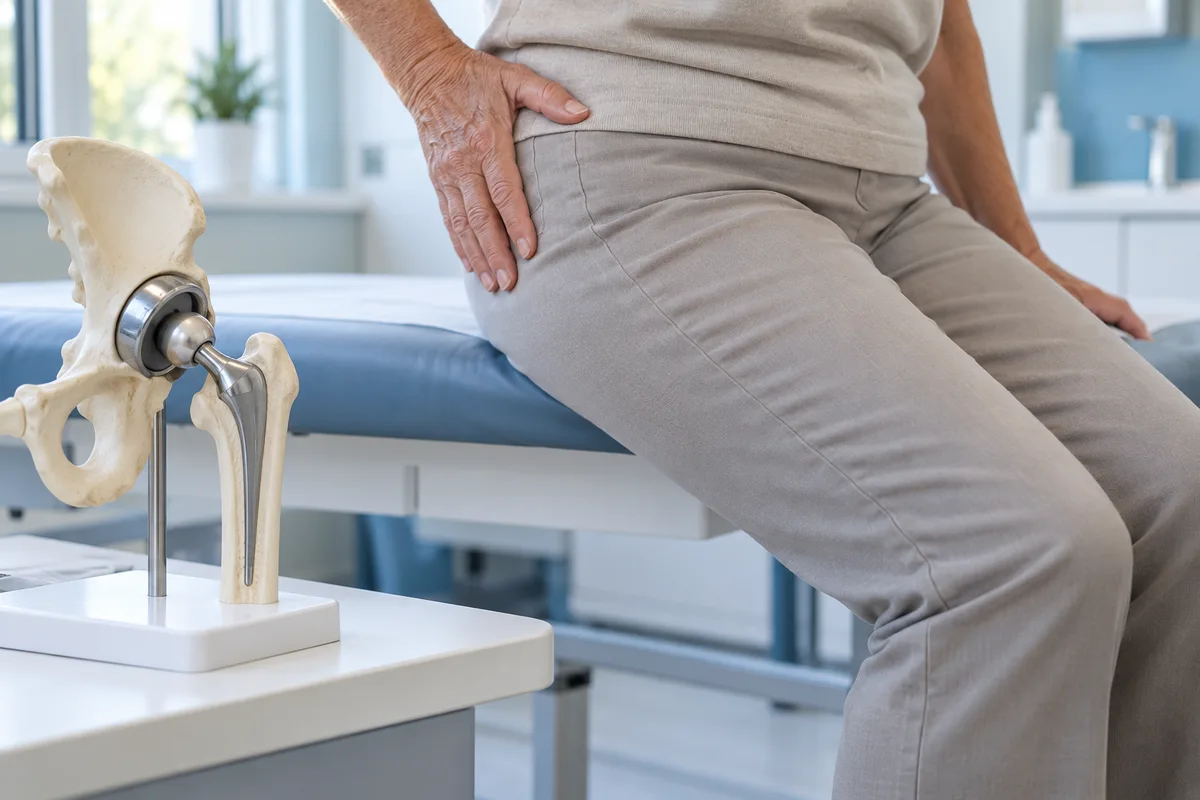
Hearing that your hip replacement X-ray looks normal can be reassuring. But if walking, climbing stairs or sleeping remains painful, it is reasonable to ask what happens next. Persistent pain after hip replacement does not automatically mean the implant has failed. Equally, a normal-looking X-ray cannot explain every painful condition around the joint.
The useful question is whether symptoms fit the expected stage of recovery or suggest a problem needing further assessment. The answer depends on the examination, the operation details and how the pain has changed over time.
What can a hip replacement X-ray show?
X-rays remain an important first investigation. They show the implant position, joint alignment and surrounding bone, and may reveal a fracture, dislocation or signs of loosening. Comparing today's films with earlier images can be more informative than reading a single report.
However, an X-ray is not a detailed picture of tendons, muscles or fluid around the hip. Some small fractures or early changes may also be difficult to see. The American College of Radiology guidance on imaging after hip replacement recommends choosing additional tests according to the suspected cause, rather than ordering the same scan for every painful hip.
Is this recovery discomfort or a new problem?
Some soreness, swelling and muscle weakness are expected during recovery. The overall direction matters: gradually improving function is different from pain that increases, returns after a comfortable period, or prevents progress with rehabilitation. There is no single recovery deadline that applies to everyone.
Note when the pain began, where it is felt and what brings it on. Is it present at rest, only when lifting the leg, or after longer walks? Did it follow a fall? These details help your clinician decide which structures need attention. Our hip replacement treatment page outlines the broader procedure and recovery pathway.
Which soft-tissue problems can cause pain?
Groin pain when raising the knee, getting into a car or climbing stairs can sometimes involve the iliopsoas tendon. After replacement, this tendon may be irritated by nearby structures, including the edge of the socket component. This is one possibility, not a diagnosis based on symptoms alone.
Pain on the outside of the hip, especially when lying on that side, may involve the gluteal tendons or nearby bursae. Weakness or a limp can help guide the examination. A 2025 review in JAAOS Global Research & Reviews describes these extra-articular sources of pain after total hip arthroplasty.
Buttock pain or discomfort travelling down the leg may originate in the lower back or nerves rather than the replacement itself. More than one problem can coexist. This is why assessment should include walking pattern, muscle strength and, where appropriate, the spine.
Can infection be present with a normal X-ray?
Yes. A reassuring X-ray does not independently exclude infection around a joint replacement. Some infections cause obvious redness, drainage or fever; others present less dramatically, with persistent pain or stiffness. The AAOS patient guidance on joint replacement infection describes assessment using symptoms, examination, blood tests and, when needed, joint-fluid testing.
Your clinician may request inflammatory markers such as CRP and ESR. These need interpretation in context, particularly soon after surgery, and are not a stand-alone diagnosis. If infection remains a concern, an image-guided aspiration may be considered. Do not start leftover antibiotics or change prescribed treatment without medical advice.
When might ultrasound, CT or MRI help?
Ultrasound can assess selected tendons and fluid collections and help guide an injection or aspiration. CT may clarify a subtle fracture, component position or bone loss. MRI using metal-artifact-reduction techniques can provide information about soft tissues that standard X-rays do not show.
These tests answer different questions. Tell the imaging team about your implant and bring its documentation if available; the appropriate protocol and safety checks should be arranged. A targeted diagnostic injection may sometimes help identify the source of pain, but it is not suitable for everyone and should follow clinical assessment.
Does persistent pain mean another operation?
No. Treatment depends on the cause. Selected tendon or muscle problems may improve with adjusted activity, suitable pain relief and supervised rehabilitation. Implant-related problems, infection or a confirmed mechanical conflict require a different discussion. Revision surgery should not be recommended simply because pain continues or because one scan is inconclusive.
Seek urgent assessment for sudden severe pain, inability to bear weight, a visibly abnormal leg position, wound drainage, or fever with worsening hip symptoms. New calf pain or swelling also needs prompt assessment. Chest pain or breathlessness requires emergency care.
For persistent symptoms, first contact your operating team. Bring your surgery date, implant details, previous X-rays and a short symptom record. You can also book an orthopaedic consultation with Dr Rahul Grover in Delhi. The aim is to identify a treatable cause before deciding what, if anything, needs changing.
This article provides general education and does not replace an individual examination or your surgeon's instructions.