ACL Tear With Meniscus Injury: Why Treating Both Together Changes Recovery
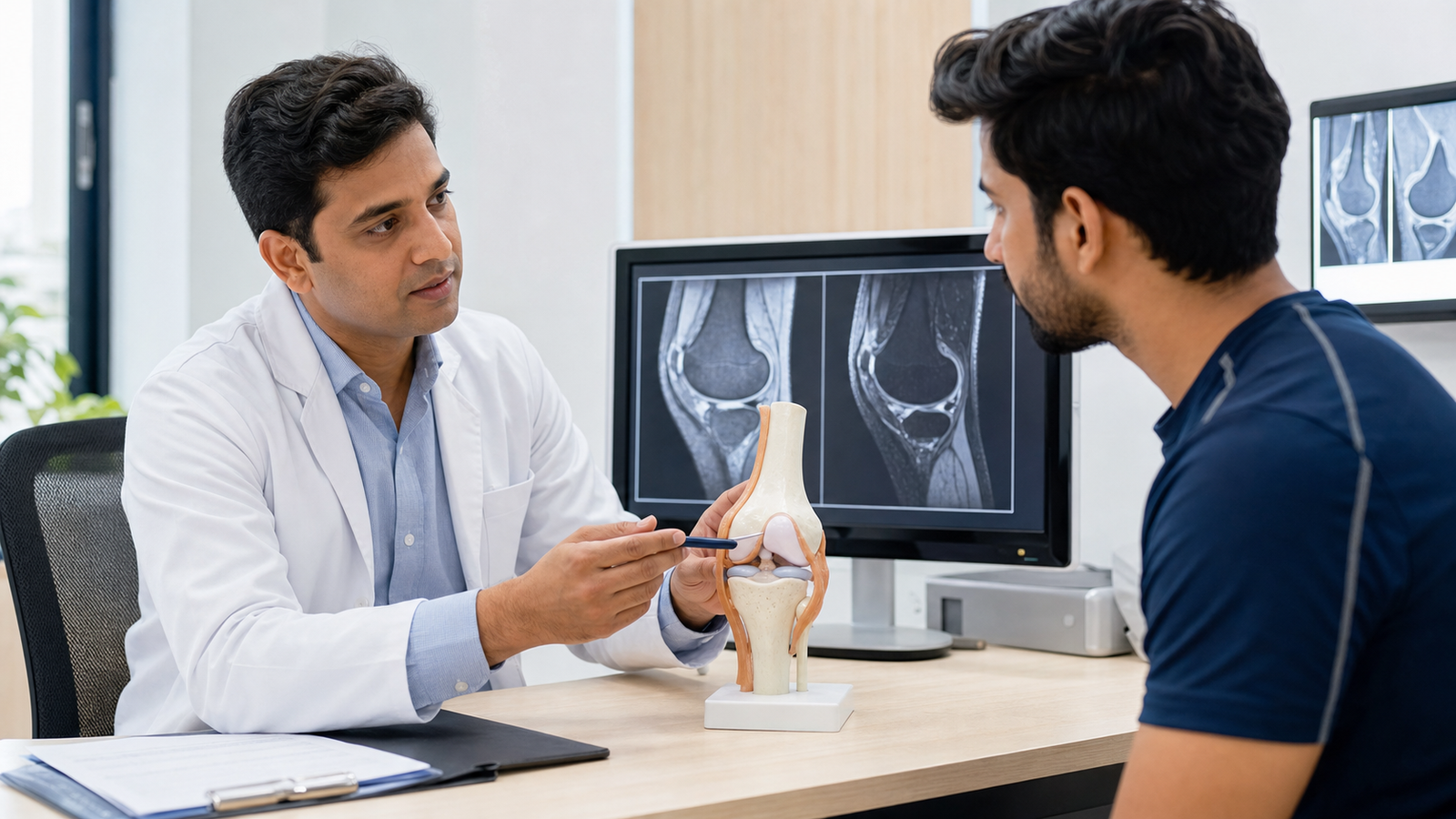
An ACL tear is already a major knee injury, but when it happens with a meniscus tear, recovery planning becomes more detailed. The ACL helps control forward movement and rotation of the knee. The meniscus works like a shock absorber between the thigh bone and shin bone. When both are injured, the knee may feel unstable, painful, swollen, and unreliable during turning, running, climbing stairs, or sports.
Many patients first ask one question: can the ACL and meniscus be treated together? In several cases, yes. Treating both injuries during the same surgical plan can improve knee stability, protect the meniscus, and support long-term joint health. But the exact approach depends on the type of meniscus tear, ACL injury pattern, patient age, activity goals, and the condition of the cartilage.
Why ACL and meniscus injuries often happen together
ACL tears commonly occur during sudden twisting, landing awkwardly, pivoting, or changing direction. The same force can trap and tear the meniscus. This is why combined ACL and meniscus injuries are common in football, cricket, basketball, kabaddi, running, gym training, and road traffic accidents.
After the injury, the knee may swell quickly. Some patients hear a pop, feel the knee give way, or find it difficult to continue activity. A meniscus tear can add locking, catching, pain along the joint line, and difficulty squatting. If the knee keeps giving way after an ACL tear, the meniscus can suffer further damage over time.
Why the meniscus should be assessed carefully
The meniscus is not an extra structure that can always be ignored or removed. It helps distribute load, protects cartilage, and supports knee stability. Losing meniscus tissue can increase pressure inside the knee joint. Over many years, this may raise the risk of early wear and arthritis.
This is why modern knee treatment focuses on saving the meniscus whenever possible. A small stable tear may be observed in selected cases. A repairable tear may be sutured during ACL reconstruction. A complex non-repairable tear may need partial trimming, but the goal is to preserve as much healthy meniscus as possible.
How combined treatment changes recovery
Recovery after isolated ACL reconstruction is different from recovery after ACL reconstruction with meniscus repair. If the meniscus is repaired, the surgeon may protect the repair by limiting deep bending or controlling weight-bearing for a period. This can make early rehabilitation more cautious, but it may help the meniscus heal and preserve knee function.
If the meniscus is trimmed instead of repaired, early movement may be faster, but that does not mean trimming is always better. The right decision is based on tear location, blood supply, tear pattern, tissue quality, and patient goals. You can learn more about surgical options on the ACL tear and ACL reconstruction service page.
When surgery may be recommended
Not every ACL tear needs immediate surgery. Treatment depends on lifestyle, instability, sports demand, age, and associated injuries. However, surgery is more commonly discussed when the patient is young, active, involved in pivoting sports, has repeated giving-way episodes, or has a repairable meniscus tear that should be addressed before it becomes worse.
ACL reconstruction restores stability by replacing the torn ligament with a graft. During the same arthroscopic procedure, the meniscus can be inspected and treated. This combined approach helps the surgeon address both the stabilizing ligament and the shock-absorbing structure in one treatment plan.
Role of MRI and arthroscopy
MRI is very useful for detecting ACL tears, meniscus tears, cartilage injury, bone bruising, and associated ligament injuries. But MRI findings must be matched with symptoms and examination. Some tears seen on MRI may not be the main pain source, while some unstable tears need active treatment.
Arthroscopy allows the surgeon to see the inside of the knee directly through small keyhole incisions. It helps confirm the meniscus tear pattern and decide whether repair or trimming is best. For related minimally invasive knee care, see the knee arthroscopy service page.
What patients should expect in rehabilitation
Rehabilitation is not just a checklist of exercises. It is a staged plan. Early goals include swelling control, knee extension, safe walking, and quadriceps activation. Later goals include strength, balance, landing control, agility, and sport-specific training. Return to sport should be based on recovery milestones, not only the number of months after surgery.
Meniscus repair may slow some early milestones because the repair needs protection. That can feel frustrating, especially for athletes, but it may be the right choice for long-term knee preservation. The article on ACL injury symptoms and when to consider surgery can help patients understand warning signs before the knee suffers repeat giving-way episodes.
Why treating both injuries matters long term
An unstable ACL can place repeated stress on the meniscus. A damaged meniscus can reduce shock absorption and add load to cartilage. When both injuries are present, ignoring one part of the problem can affect recovery quality. A combined treatment plan aims to restore stability, preserve meniscus tissue, protect cartilage, and help patients return to activity safely.
Dr Rahul Grover evaluates ACL and meniscus injuries with clinical examination, MRI review, activity goals, and knee stability testing. The aim is to choose a treatment plan that fits the patient, not just the scan report.
Conclusion
ACL tear with meniscus injury needs careful planning because both structures influence knee stability and long-term joint health. Treating them together can change the rehabilitation timeline, but it may also protect the knee better in the future. If your knee gives way, locks, swells after activity, or MRI shows ACL and meniscus injury, consult an experienced orthopaedic knee specialist.
For personalised guidance, Dr Rahul Grover provides treatment for ACL tears, meniscus injuries, knee arthroscopy, and sports knee injuries in Delhi.

About Dr Rahul Grover
Dr. Rahul Grover is a highly respected orthopaedic surgeon known for advanced joint replacement, arthroscopy, spine care, fracture management, and sports orthopaedics.
Know More