Avascular Necrosis of the Hip in Young Adults: Early Signs Before Joint Collapse
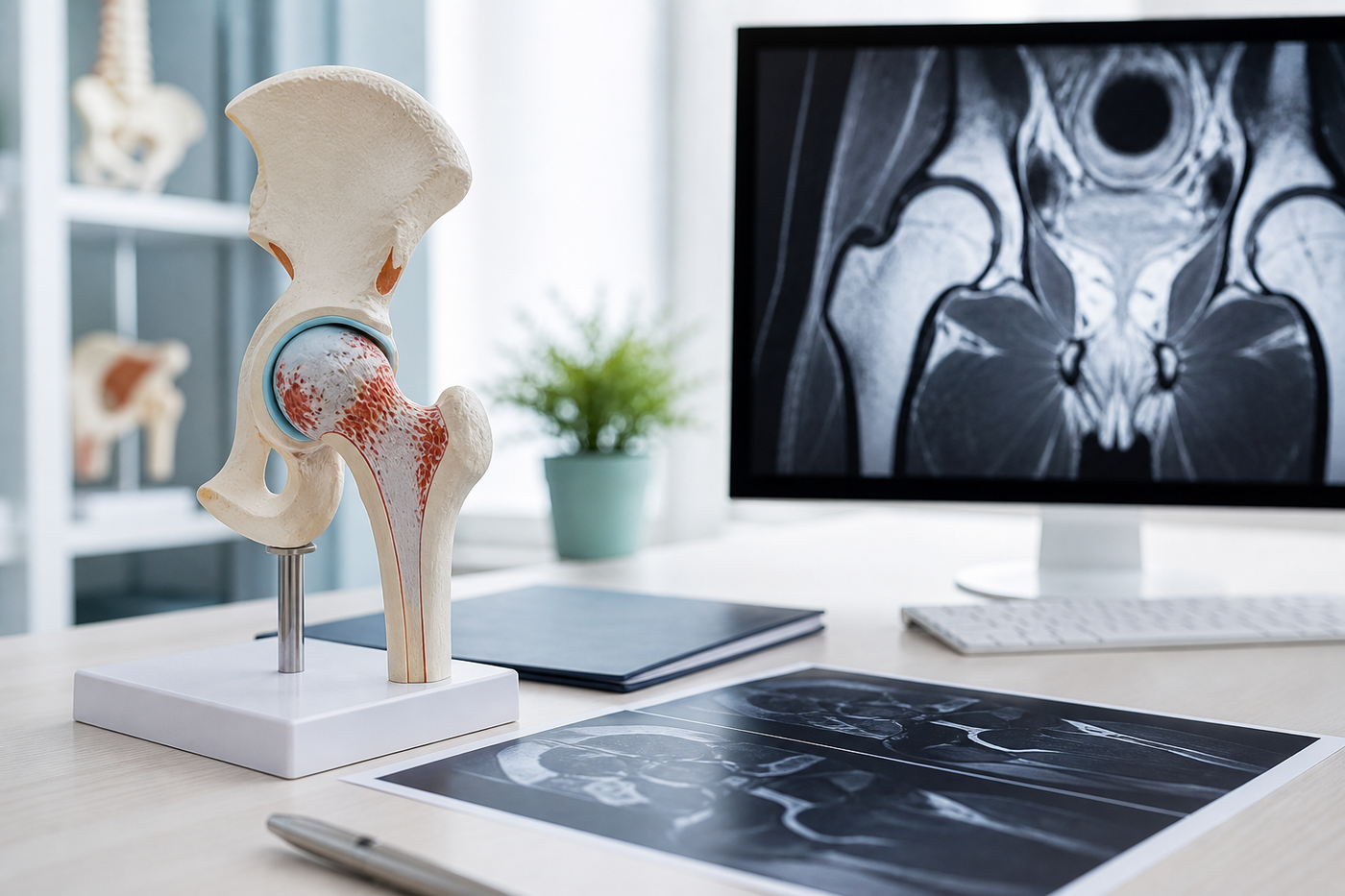
Avascular necrosis of the hip, also called AVN or osteonecrosis, is a condition where blood supply to the femoral head is reduced. The femoral head is the ball of the hip joint. When this area does not get enough blood, bone cells can weaken and die. If the problem is not detected early, the rounded surface of the femoral head may flatten or collapse, leading to pain, stiffness, and arthritis-like joint damage.
AVN is especially important in young adults because the first symptoms can be subtle. A person may feel groin pain after walking, gym training, running, sitting for long hours, or climbing stairs. Early X-rays may look normal, so the condition can be mistaken for muscle strain, tendon pain, or regular hip stiffness. Timely diagnosis can change the treatment conversation before the joint surface collapses.
Why AVN can affect young adults
Hip AVN can occur after trauma, such as a hip fracture or dislocation, because the injury may disturb blood vessels supplying the femoral head. It can also be linked with long-term or repeated corticosteroid use, excessive alcohol intake, blood clotting problems, sickle cell disease, autoimmune conditions, and some other medical disorders. In some patients, no clear cause is found.
Young adults sometimes delay review because they do not expect a serious hip condition at their age. That delay matters. AVN can progress silently from early bone stress to loss of structural support. Once collapse begins, hip-preserving options become more limited, and advanced cases may eventually need joint replacement.
Early signs before femoral head collapse
The most common early warning sign is deep pain in the groin, front of the hip, thigh, or buttock. Pain may appear during weight-bearing activity and improve with rest in the beginning. As AVN progresses, pain may become more constant and may even disturb sleep. Some patients notice limping, difficulty standing for long periods, trouble squatting, or reduced hip rotation.
Another clue is pain that feels out of proportion to a simple strain. If pain keeps returning despite rest, physiotherapy, or medicines, the hip joint should be evaluated properly. Pain that travels toward the knee can also confuse patients, because they may assume the knee is the main problem. In hip AVN, the source can still be the femoral head.
Why MRI is important
X-rays are useful, but they may not show early AVN. By the time visible flattening or collapse appears on X-ray, the disease may already be more advanced. MRI can detect early bone changes, marrow swelling, and the size and location of the affected area. This helps the orthopaedic surgeon decide whether the hip is still in a preservation stage or whether collapse has already started.
Clinical examination is also important. The doctor checks hip movement, walking pattern, pain location, range of motion, and any spine or knee contribution. The scan should not be read in isolation. The best plan combines symptoms, examination, imaging stage, age, activity needs, and medical risk factors.
Treatment depends on the stage
Early AVN without collapse may be managed with protected weight bearing, activity changes, medicines in selected cases, and close follow-up. Some patients may be considered for hip-preserving surgery such as core decompression, where pressure inside the bone is reduced and blood flow support is encouraged. The aim is to slow progression and protect the natural hip joint where possible.
If the femoral head has collapsed or arthritis has developed, treatment choices change. In advanced cases, hip replacement surgery may be discussed to reduce pain and restore function. This is why early-stage detection is so valuable, especially for young and active patients who want to delay or avoid major joint replacement when suitable.
What not to ignore
Do not ignore hip pain that lasts more than two to three weeks, causes limping, becomes worse with walking, wakes you at night, or keeps coming back after activity. Young adults with a history of steroid use, alcohol overuse, previous hip injury, blood disorders, or autoimmune disease should be more alert. Persistent groin pain in these settings deserves specialist review.
It is also important not to continue high-impact activity through unexplained hip pain. Running, jumping, heavy squats, and contact sport can increase load across the femoral head. Until the cause is clear, activity should be modified. Patients with sports-related hip pain may also benefit from structured assessment through sports injury care.
How Dr Rahul Grover plans care
Dr Rahul Grover evaluates suspected hip AVN with a diagnosis-first approach. The assessment includes symptom history, risk-factor review, examination, X-rays, MRI when needed, and discussion of activity goals. The focus is to identify whether the hip is in an early preservation stage or an advanced collapse stage.
For young adults, the goal is not only pain relief. The goal is to protect hip function, avoid delayed diagnosis, and choose a treatment pathway that fits the stage of disease. Some patients need monitoring and lifestyle changes, some may need hip-preserving procedures, and some advanced cases may need replacement planning. For related reading, see the article on hip pain in young adults.
Conclusion
Avascular necrosis of the hip can affect young adults and may begin before X-rays show obvious damage. Deep groin pain, limping, night pain, reduced hip rotation, or persistent pain after activity should not be ignored. MRI can help detect AVN before femoral head collapse, when hip-preserving treatment may still be possible.
If you have ongoing hip pain or risk factors for AVN, consult an orthopaedic hip specialist early. Dr Rahul Grover provides evaluation and treatment for hip AVN, young-adult hip pain, sports hip injuries, and advanced hip conditions in Delhi.

About Dr Rahul Grover
Dr. Rahul Grover is a highly respected orthopaedic surgeon known for advanced joint replacement, arthroscopy, spine care, fracture management, and sports orthopaedics.
Know More