When the scan and your symptoms seem to disagree
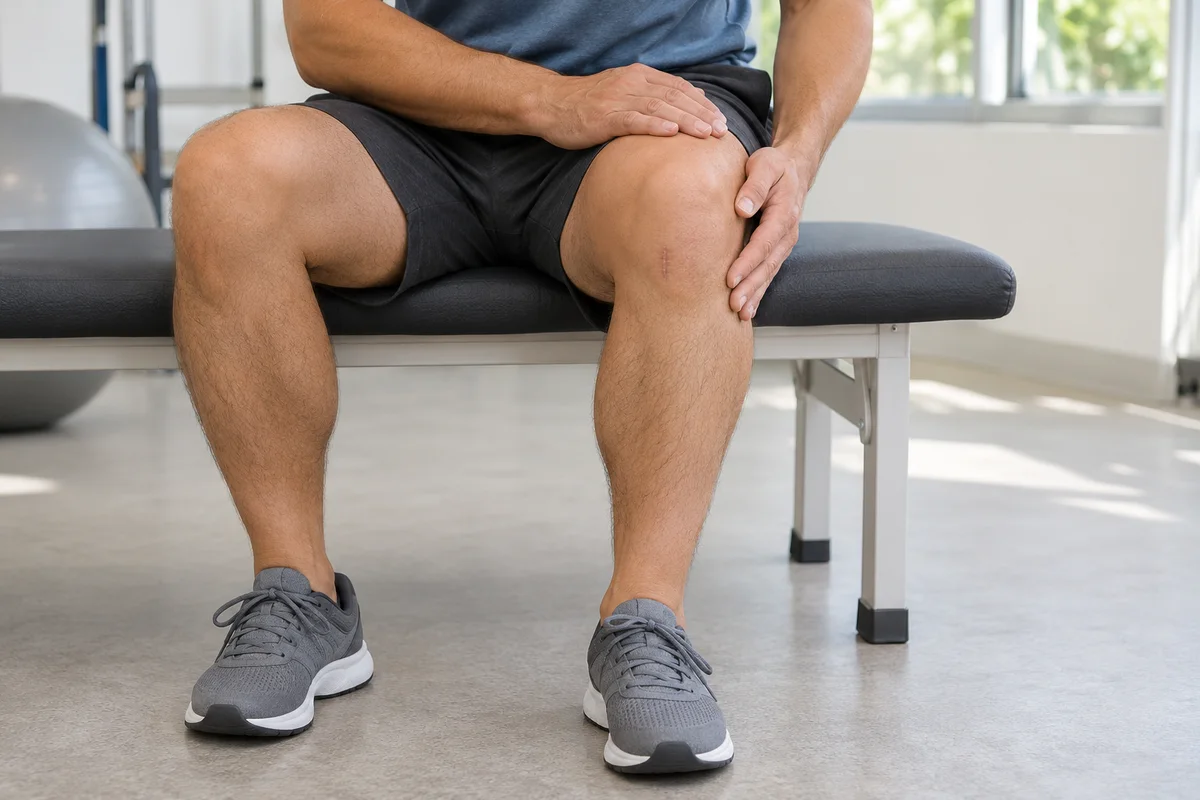
You have completed ACL reconstruction, but your knee still feels unreliable when turning, using stairs or returning to activity. An MRI report describes the graft as intact, yet the knee occasionally buckles. These findings can seem contradictory, but a visible graft and a functionally stable knee are not exactly the same thing.
Knee giving way after ACL reconstruction deserves assessment rather than reassurance from one sentence in a scan report. It does not automatically mean that surgery has failed or that another operation is necessary. The important question is why the episodes are happening.
What does an intact ACL graft on MRI mean?
MRI helps assess graft continuity and other structures inside the knee. However, it is a static examination, not a direct test of how the knee behaves during a turn or landing. A graft may look continuous while being stretched or providing insufficient restraint.
Postoperative appearance also depends on healing stage and surgical changes. Research has documented disagreement between MRI findings and clinical or arthroscopic assessments in selected patients undergoing revision. That does not make MRI unhelpful; it means the images must be interpreted with your history and examination.
Bring the actual images, previous reports and operation details to your appointment. Ask whether the graft is merely continuous on imaging or whether the knee also tests stable clinically.
Is every buckling episode caused by ligament looseness?
No. Some people describe a brief collapse associated with pain, swelling or reduced thigh-muscle control. Others describe a definite shift during pivoting. Weakness and impaired movement coordination can persist after surgery, and confidence may take time to recover.
These experiences can overlap. Your clinician needs to distinguish mechanical laxity from difficulty controlling an otherwise stable joint. A home twisting test or a successful walk around the room cannot reliably make that distinction. Note the activity, discomfort and swelling associated with each episode instead.
Which structural problems might explain instability?
The reconstructed ligament is only one part of knee stability. Graft position and tension affect how it controls movement. For example, a graft that is too vertical may provide inadequate rotational control even when it remains visible on MRI.
A new injury, graft stretching, associated ligament damage or a meniscal tear can also contribute. The menisci help stabilise the joint, and certain root or peripheral tears need careful assessment. Alignment and the slope of the tibia may matter in selected cases, particularly when planning revision surgery.
These are possibilities to investigate, not conclusions about your original operation. Our ACL reconstruction and treatment page explains the broader treatment pathway. Symptoms alone cannot identify a technical problem or establish the need for revision.
What should a reassessment include?
The review begins with when the instability started, whether recovery had previously been satisfactory, any new injury, and the rehabilitation completed. Examination assesses swelling, movement, muscle strength and stability. Tests such as the Lachman and pivot-shift are performed by a trained clinician, not by patients at home.
MRI may help assess the graft, menisci and cartilage. X-rays can provide information about alignment and previous surgery; CT is sometimes used to define bone tunnels when revision is being considered. Not everyone needs all these investigations.
Difficulty fully straightening the knee is a separate clue worth mentioning. Our article on knee extension loss after ACL surgery discusses one possible cause of a persistent movement restriction.
When can rehabilitation help?
If assessment finds a stable graft but deficits in strength or movement control, a targeted rehabilitation programme may be appropriate. This can address quadriceps and hamstring strength, balance, coordination and the demands of your usual activities.
Progress should be assessed with suitable objective measures, not simply the number of months since surgery. Return-to-sport decisions consider symptoms, range of movement, stability, strength, functional performance and psychological readiness. A single reassuring scan does not provide clearance for unrestricted pivoting sport.
Until reviewed, avoid activities that repeatedly provoke giving way. Ask your physiotherapist how to modify loading safely rather than abandoning rehabilitation or pushing through repeated episodes.
Does persistent instability require revision ACL surgery?
Revision may be considered when clinically confirmed instability continues to limit daily life or desired activities and a correctable cause is identified. Planning must account for associated injuries and previous tunnels, not simply replace a graft without investigating the reason for symptoms.
Some people benefit from further rehabilitation or activity changes instead. The decision depends on examination findings, goals and the risks and likely benefits of each option. No treatment can guarantee a particular sporting outcome.
When should you seek help?
Arrange a review for recurrent giving way, new swelling or a clear setback after injury. A locked knee, inability to bear weight, or a hot swollen knee with fever needs urgent assessment. Do not repeatedly test an unstable knee through sport.
Contact your operating team or book an orthopaedic assessment with Dr Rahul Grover in Delhi. The next step should follow the cause of the instability, rather than the MRI wording alone.
Educational references: Grassi et al., Magnetic resonance imaging after anterior cruciate ligament reconstruction: A practical guide (2016); Monllau et al., Anterior cruciate ligament failure and management (2023); Kemler et al., Evaluation of Failed ACL Reconstruction (2024); Aspetar clinical practice guideline on rehabilitation after ACL reconstruction (2023); AAOS OrthoInfo, ACL Injury: Does It Require Surgery? General information only, not a substitute for individual medical advice.